











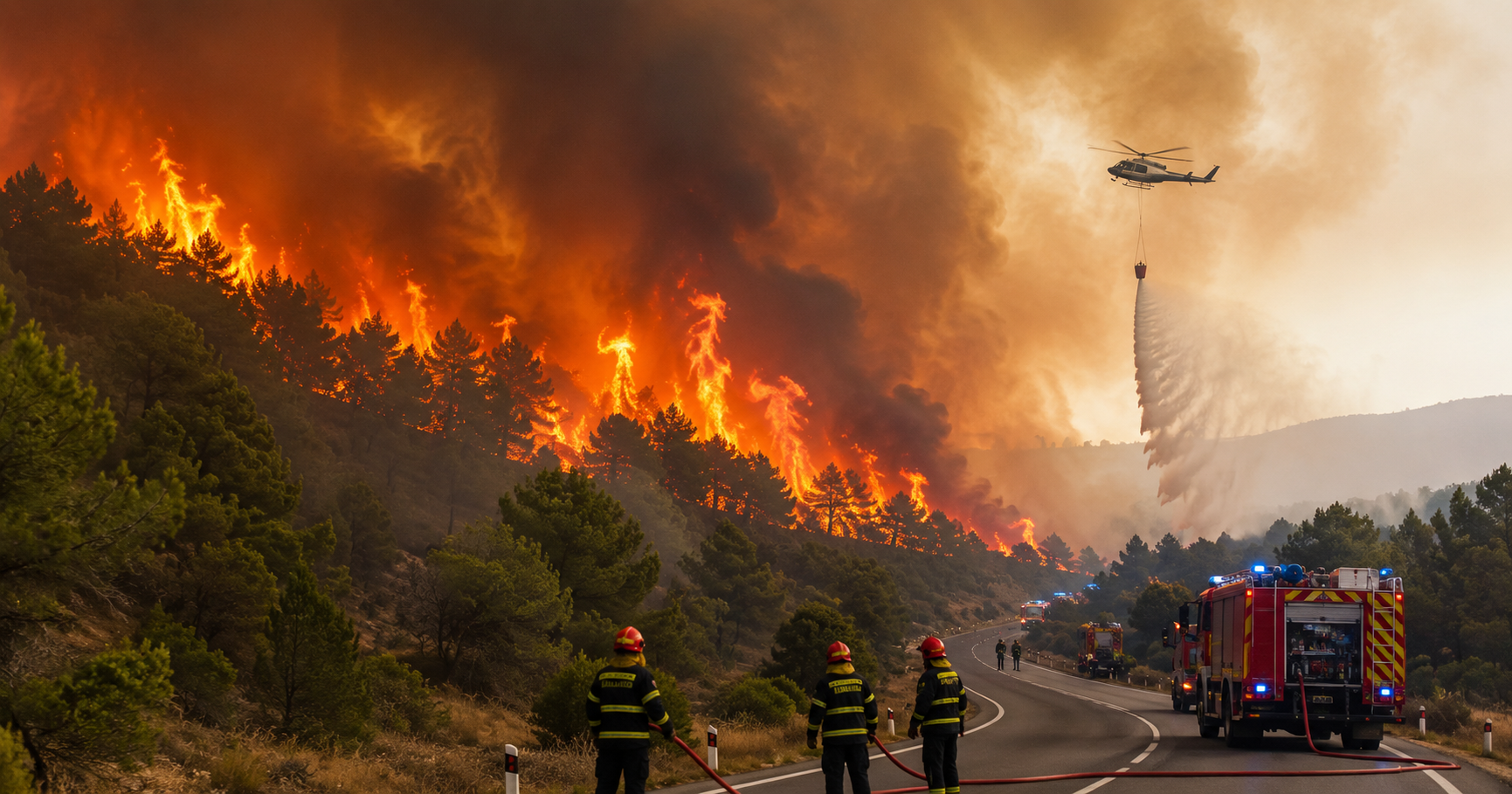
Wildfires have long been part of the natural environment in many parts of Europe, particularly in Mediterranean countries where hot, dry summers create favorable conditions for fires. In recent years, however, the scale, intensity, and frequency of these events have changed dramatically. Fires that were once considered seasonal emergencies are increasingly becoming national disasters, threatening lives, destroying communities, disrupting economies, and placing enormous pressure on emergency services.
The growing severity of European wildfires has sparked an important debate among scientists, policymakers, environmental organizations, and the public. Are these disasters primarily the result of climate change, or are they also symptoms of aging infrastructure, expanding development into fire-prone areas, and insufficient preparedness?
The answer is unlikely to be simple. Instead, it lies at the intersection of environmental change, public policy, technological innovation, and human behavior.
Extreme Wildfires in Europe Are No Longer Isolated Events
Across Southern Europe, countries such as Spain, Portugal, Greece, Italy, and France have experienced increasingly destructive wildfire seasons over the last decade. Higher temperatures, prolonged droughts, and stronger winds have combined to create conditions that allow fires to spread rapidly over large areas.
Climate scientists have warned that warmer conditions extend the fire season and dry vegetation more quickly, making forests and grasslands easier to ignite. Once a fire starts, extreme weather can accelerate its spread beyond the capacity of local emergency services.
The consequences extend far beyond burned forests. Entire communities may be displaced, transportation networks disrupted, agricultural production interrupted, and tourism affected. Recovery often takes years, with ecological damage lasting even longer.
Climate Change and Extreme Wildfires: Understanding the Connection
One of the most widely discussed drivers of modern wildfire risk is climate change.
Rising global temperatures contribute to more frequent and intense heatwaves. Higher temperatures increase evaporation, reduce soil moisture, and dry vegetation, creating ideal fuel for fires. Scientists also point to changing rainfall patterns that leave some regions vulnerable to prolonged drought before the hottest months of the year.
According to the Copernicus Climate Change Service, Europe is warming faster than the global average, increasing the likelihood of prolonged periods of extreme heat. These changing climatic conditions do not necessarily cause every wildfire, but they can significantly increase the probability that small fires become large, difficult-to-control disasters.
Supporters of stronger climate policies argue that reducing greenhouse gas emissions is essential to limiting future wildfire risks. Others contend that adaptation measures—such as better land management and improved emergency planning—deserve equal attention because climate impacts are already being felt.
Can Infrastructure Increase Wildfire Risk?
Climate is only one piece of the puzzle.
Infrastructure also plays a critical role in wildfire prevention.
Electrical transmission lines, aging utility equipment, transportation corridors, and industrial facilities can all become potential ignition sources if they are not properly maintained. In regions where prolonged heat has already dried vegetation, even a single spark can trigger a fast-moving fire.
Modern technology offers opportunities to reduce these risks. Smart electrical grids, remote monitoring systems, drones, satellite imagery, and artificial intelligence can help identify potential hazards before they develop into emergencies.
However, implementing these technologies requires sustained investment, effective regulation, and coordination between governments, utility companies, and emergency agencies.
This raises an important public policy question: should governments require greater investment in infrastructure resilience even when the costs are significant?
Emergency Preparedness Saves Lives
Wildfires cannot always be prevented, but their consequences can often be reduced.
Preparedness includes more than firefighting. It involves early warning systems, evacuation planning, public education, communication strategies, and coordination between emergency services.
Communities located near forests or grasslands benefit from clearly marked evacuation routes, emergency shelters, and public awareness campaigns that explain what residents should do when fires threaten their homes.
Technology has improved emergency response considerably. Satellite monitoring, weather forecasting, geographic information systems (GIS), and mobile emergency alerts allow authorities to respond more quickly than ever before.
Even so, experts emphasize that preparedness must become a continuous process rather than a seasonal activity.
The Human Cost of Wildfires
Statistics often dominate discussions about natural disasters, but behind every number are individuals, families, and communities whose lives have been permanently changed.
Wildfires can result in loss of life, injuries, displacement, property destruction, and long-term psychological effects. Farmers may lose crops and livestock, businesses may close temporarily or permanently, and entire local economies can suffer.
The emotional impact should not be underestimated. Rebuilding homes is often easier than rebuilding a sense of security.
Communities affected by repeated disasters may also experience increased stress, anxiety, and uncertainty about their future.
Should Governments Invest More in Prevention Than Response?
One of the most important debates surrounding wildfire management concerns public spending.
Many governments allocate substantial resources to firefighting equipment, emergency personnel, and disaster recovery after fires occur.
Some experts argue that greater emphasis should be placed on prevention instead.
Preventive measures may include:
- Forest management and controlled burns.
- Modernizing electrical infrastructure.
- Expanding wildfire detection technologies.
- Strengthening building codes in fire-prone regions.
- Improving evacuation planning.
- Public education campaigns.
Supporters believe prevention reduces both economic costs and human suffering.
Critics argue that prevention programs require long-term funding and political commitment, making them difficult to sustain when governments face competing priorities.
Finding the right balance between prevention and response remains one of the greatest challenges for policymakers.
What Can Individuals Do?
Governments and emergency agencies play vital roles, but individuals also contribute to wildfire resilience.
Simple actions can reduce risks significantly, including maintaining defensible space around homes, following local fire restrictions, preparing emergency kits, and staying informed through official weather and emergency alerts.
Community participation strengthens overall preparedness. Neighborhood planning, volunteer organizations, and public awareness initiatives often improve resilience before disasters occur.
Prepared communities recover more quickly because residents understand both the risks and the appropriate responses.
The Debate: Are Europe’s Wildfire Policies Keeping Pace with a Changing Climate?
As wildfire seasons become longer and more destructive, an important question emerges:
Are existing policies sufficient for the challenges of the twenty-first century?
Some environmental experts argue that Europe must dramatically increase investments in climate adaptation, sustainable land management, and modern emergency infrastructure.
Others believe existing policies are generally effective but require stronger implementation and better coordination across national and regional governments.
A third perspective suggests that wildfire resilience should become a shared responsibility involving governments, private companies, scientists, local communities, and individual citizens.
Regardless of which position one supports, the debate illustrates that wildfire management has evolved beyond environmental policy. It now intersects with public health, economic development, energy infrastructure, urban planning, and national security.
Conclusion
Extreme wildfires are becoming one of Europe’s defining environmental and public safety challenges. While climate change is increasing the likelihood of severe fire conditions, infrastructure resilience, emergency preparedness, land management, and community awareness all influence how destructive these events become.
There is no single solution. Building resilience will require investment in science, technology, education, and public policy, alongside international cooperation and local action.
The ultimate question is not whether wildfires can be eliminated—they cannot. The more pressing question is whether societies are willing to adapt quickly enough to reduce their human, environmental, and economic consequences.
Preparing for tomorrow’s wildfire seasons begins with decisions made today.
Frequently Asked Questions
Why are wildfires becoming more severe in Europe?
Warmer temperatures, prolonged droughts, changing weather patterns, land-use practices, and expanding development in fire-prone areas all contribute to increased wildfire risk.
Does climate change directly cause wildfires?
Climate change does not ignite fires, but it creates hotter and drier conditions that can make fires more likely to start and spread rapidly.
How can governments reduce wildfire risks?
Governments can invest in forest management, resilient infrastructure, early warning systems, emergency planning, and public education while strengthening climate adaptation strategies.
Where can I learn more?
The Copernicus Climate Change Service provides scientific information on climate trends across Europe: https://climate.copernicus.eu. The European Forest Fire Information System (EFFIS) also publishes data on wildfire activity: https://effis.jrc.ec.europa.eu.