










Why Poland Invoked NATO Article 4 After Russian Drone Intrusions
What Happened — Drone Incursion and Article 4 Activation
In a dramatic escalation of regional tensions, Poland has officially invoked NATO Article 4 after reporting that around 19 Russian drones violated its airspace on the night of September 10, 2025. The drones, part of a broader Russian strike against Ukraine, entered Polish territory from the direction of Belarus, triggering Poland’s air defense systems and scrambling NATO interceptors.
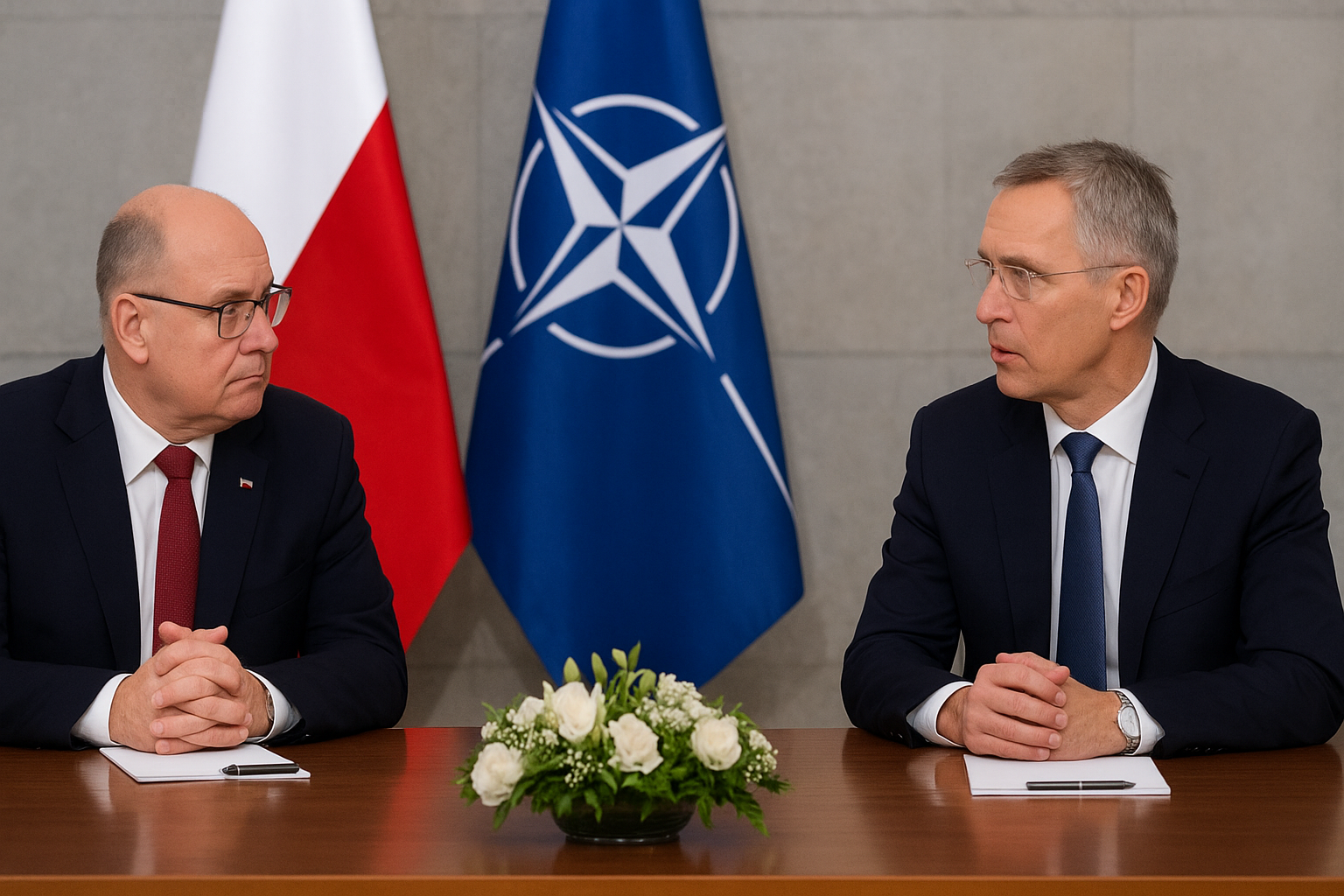
This marks one of the most serious security incidents involving NATO territory since the full-scale war in Ukraine began in 2022. Prime Minister Donald Tusk described the incursions as an “act of aggression” and called for immediate consultations with NATO allies. By activating Article 4, Poland signaled that the incident is not merely a border issue but a direct challenge to the collective security of the alliance.
The move highlights growing concerns on NATO’s eastern flank, where repeated violations of airspace and cross-border spillovers are testing the alliance’s ability to deter Russian escalation while avoiding direct war.
Understanding NATO Article 4: What It Means and Why It Matters
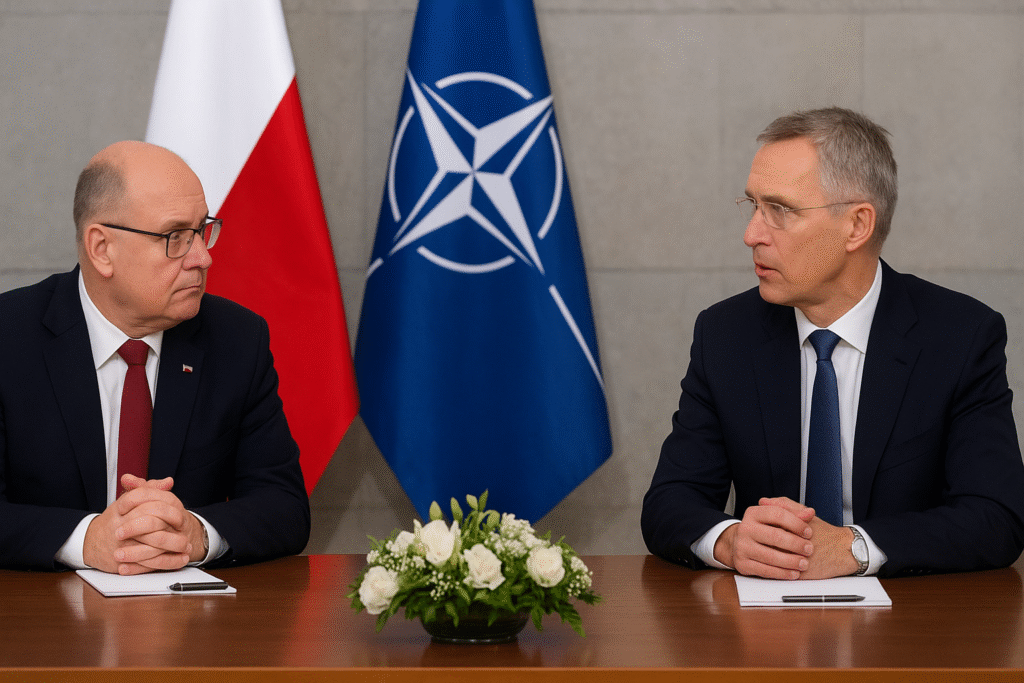
NATO Article 4 is often overshadowed by the more famous Article 5, which commits all members to collective defense in case of an armed attack. Article 4, however, plays a vital preventive role. It states that “the parties will consult together whenever, in the opinion of any of them, the territorial integrity, political independence, or security of any of the parties is threatened.”
Unlike Article 5, invoking Article 4 does not obligate NATO to take military action. Instead, it opens the door to urgent consultations among member states, enabling them to assess threats, share intelligence, and coordinate responses ranging from diplomatic pressure to military preparedness.
Poland has invoked Article 4 before—most notably in 2014, after Russia’s annexation of Crimea, and again in 2022 alongside other eastern allies when Russia launched its full-scale invasion of Ukraine. Historically, Article 4 has been triggered only eight times since NATO was founded in 1949, underscoring the seriousness of Poland’s latest move.
For NATO, Article 4 is both a political signal and a defensive measure. It demonstrates unity, reassures frontline states, and warns adversaries that aggression will not go unnoticed.
Why Poland Chose Article 4 — Strategic Logic Behind the Move
The decision to invoke NATO Article 4 was neither impulsive nor symbolic. It reflects a calculated set of objectives designed to strengthen Poland’s security while testing NATO’s readiness.
Escalation Without Immediate War Declaration
By choosing Article 4 instead of demanding an Article 5 response, Poland avoided escalating the situation into a full-scale NATO-Russia confrontation. This was a measured escalation—serious enough to grab international attention but restrained enough to keep diplomatic options open. It allows Poland to highlight the threat while maintaining strategic flexibility.
Seeking Tangible Support, Not Just Words
Prime Minister Tusk made it clear that “words are not enough.” Poland expects concrete reinforcement of its air defenses, particularly against drones and missiles. The Article 4 consultation provides a platform to request advanced systems, intelligence sharing, and coordinated patrols. For Poland, this isn’t just about symbolic solidarity—it’s about securing practical tools to defend its skies.
Testing NATO’s Unity and Readiness
Article 4 serves as a litmus test for NATO’s cohesion and speed of response. Will allies stand shoulder to shoulder with Poland in a moment of acute danger? Or will political divisions delay action? By activating consultations, Warsaw is compelling NATO to demonstrate its credibility, both to member states and to Russia.
Context of Regional Tensions and Military Threats
The drone incursion occurred just days before joint Russian–Belarusian military exercises, raising fears that Moscow may be testing NATO’s resolve or probing for weaknesses along its eastern flank. Poland’s action is therefore not just a reaction to one night’s events, but part of a broader strategy to deter further encroachments and to remind NATO that the eastern border is the frontline of European security.
Broader Implications for NATO, Europe, and Poland’s Defense Posture
For NATO: A Critical Stress Test
The incident forces NATO to confront uncomfortable questions: how should the alliance respond to repeated “gray zone” provocations that fall short of outright invasion but still threaten member security? Options may include:
- Expanding joint air patrols over Poland and neighboring states.
- Deploying additional air defense systems along the border.
- Fast-tracking new defense initiatives such as an EU-backed “drone wall.”
Whatever the outcome, Poland’s request ensures that NATO cannot remain passive.
For Europe: Unity Under Pressure
Beyond NATO, the European Union is also being tested. The drone incursions add urgency to ongoing EU efforts to boost defense integration, increase sanctions pressure on Moscow, and support Ukraine militarily. European leaders now face the challenge of showing unity at a time when domestic politics, war fatigue, and economic concerns threaten to divide them.
For Poland: A Frontline State in Action
Poland has positioned itself as one of NATO’s most defense-forward members, spending nearly 5% of GDP on its military—one of the highest rates in the alliance. By invoking Article 4, Warsaw is underscoring its role as a frontline guardian of NATO’s eastern flank. The move enhances its diplomatic leverage, ensuring its voice carries weight in alliance decision-making, while reinforcing its image as a nation unwilling to compromise on sovereignty.
Outbound Link — Learn More About Article 4
For a deeper look at how NATO defines and applies Article 4, you can visit NATO’s official page on Article 4.
Conclusion
Poland’s decision to invoke NATO Article 4 after the violation of its airspace by Russian drones is not just a defensive measure—it is a carefully calibrated act of strategy. It signals to Moscow that Warsaw will not tolerate aggression, reminds allies of their obligations, and positions Poland at the center of NATO’s collective security agenda.
The logic behind this move is clear: escalate just enough to gain attention, seek tangible military reinforcement, test alliance unity, and pre-empt further Russian destabilization. For NATO, this is more than a consultation—it’s a moment to prove that the alliance remains credible, resilient, and prepared to defend every inch of its territory.
As tensions continue to rise on Europe’s eastern frontier, Poland’s invocation of Article 4 may be remembered not just as a reaction to drones, but as a defining moment in shaping NATO’s response to 21st-century security threats.





Embark into the massive galaxy of EVE Online. Forge your empire today. Fight alongside hundreds of thousands of pilots worldwide. [url=https://www.eveonline.com/signup?invc=46758c20-63e3-4816-aa0e-f91cff26ade4]Start playing for free[/url]
My brother recommended I might like this web site.
He was once totally right. This submijt actually made
my day. You can not consider just how much time I had spent for
this info! Thanks!
Trying out Milyon88demo. It’s just a demo so far, but looks promising! Hoping they launch the real deal soon! milyon88demo