












At Least 32 Dead After Crane Collapses on Moving Train in Thailand
In a devastating incident on Thursday morning, at least 32 people were killed and 66 others injured after a construction crane collapsed onto a moving train in north-eastern Thailand. The tragedy, now being referred to as the Thailand crane train accident, has shocked the nation and prompted immediate action from local authorities.
The accident occurred at approximately 09:00 local time (02:00 GMT), as a crane was lifting a large concrete section near the railway tracks in Ubon Ratchathani province. The section fell onto the train, derailing four carriages and igniting a fire in one of them.
Among the injured are passengers ranging from a one-year-old infant to an 85-year-old senior, with seven people reported in critical condition, according to local authorities. The train had been carrying approximately 171 passengers, including students and workers traveling for school and work in surrounding districts.
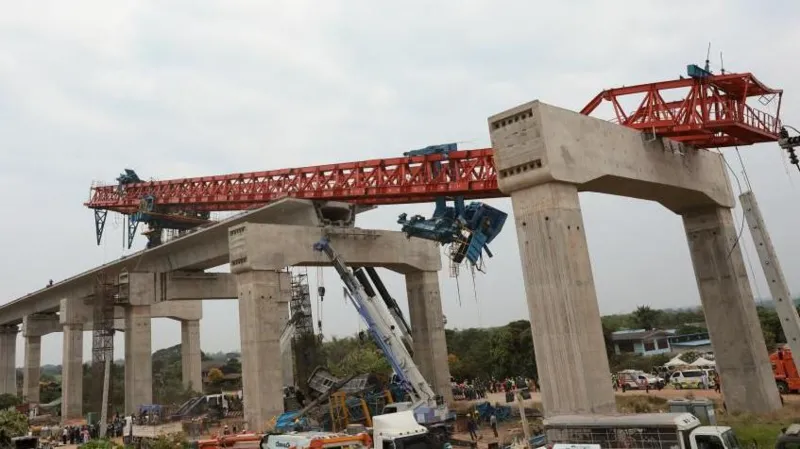
Eyewitness Accounts Reveal Moments of Horror
Eyewitnesses provided harrowing accounts of the accident. Maliwan Nakthon, a local resident, told BBC Thai:
“There were small pieces, like fragments of concrete, that started falling. After those fell, the crane slowly slid down and hit. It struck hard, and then it came down and crushed the train. The whole incident took less than one minute.”
Another survivor, Thirasak Wongsoongnern, a train staff member, described being thrown into the air along with other passengers. These accounts underscore the unprecedented scale of the crane-train collision, highlighting the vulnerability of public transport infrastructure when working near heavy construction operations.
Authorities Launch Investigation, Legal Action Imminent
The State Railway of Thailand has confirmed that it has launched a formal investigation into the accident and plans to take legal action against the construction company responsible.
Italian-Thai Development Public Company Limited, the firm overseeing the construction, expressed deep regret and pledged to provide compensation and relief to the families of victims. The company’s statement noted:
“We are committed to working with authorities and providing full assistance to the affected families. This is a tragic event and we will take all necessary measures to prevent recurrence.”
The Human Cost of Infrastructure Failures
Crane collapses and construction-related accidents are a serious concern in Thailand, a country that has experienced rapid infrastructure expansion over the past decade. While trains remain one of the safest modes of transportation globally, incidents like the Thailand crane-train accident highlight the risks posed when construction operations intersect with public transport routes.
Experts emphasize the importance of rigorous safety protocols, especially when lifting heavy materials near active railway lines. According to Thailand’s Department of Railways Safety Division, regular inspections, proper crane certification, and clear communication with train operators are critical to preventing such disasters.
International and Local Reactions
The accident has drawn both national and international attention. Social media platforms were flooded with messages of support for the victims and calls for stricter safety enforcement in construction zones.
Prime Minister Srettha Thavisin expressed his condolences, stating:
“This is a tragic day for Thailand. Our thoughts are with the families of those affected. We will ensure a thorough investigation and hold accountable anyone responsible for this disaster.”
Local NGOs and transport safety advocates have urged the government to re-evaluate railway construction safety regulations, particularly in regions with heavy industrial activity.
Lessons in Railway Safety
The Thailand crane-train accident serves as a stark reminder of the dangers posed when construction activities and public transport intersect. Key lessons include:
- Mandatory Safety Audits: Construction companies operating near active tracks must undergo rigorous inspections.
- Cranes and Heavy Equipment Regulation: Proper certification and real-time monitoring of cranes are crucial.
- Emergency Response Preparedness: Railway authorities and local hospitals need rapid-response plans for mass-casualty incidents.
- Public Awareness: Passengers should be informed of potential construction hazards near train lines.
The incident could trigger long-term reforms in Thailand’s railway and construction sectors, ensuring that such a catastrophic event does not recur.
Conclusion
The Thailand crane-train accident has left a tragic mark on the nation, claiming dozens of lives and injuring scores more. While investigations continue, authorities are emphasizing accountability, compensation, and enhanced safety measures for the future.
As Thailand mourns this devastating loss, the incident underscores the need for vigilance, regulation, and the human cost of infrastructure failures.
Outbound Links / References:
Railway Safety Guidelines – Thailand Department of Railways
BBC News – Thailand Crane-Trains Accident
State Railway of Thailand Official Statement
Italian-Thai Development Public Company Limited
BBC News – Trump’s Iran Policy