








Introduction: Why the Greenland Summit Matters Now
Greenland summit discussions are no longer symbolic diplomacy—they represent a decisive geopolitical moment. As U.S. Vice-President JD Vance hosts Danish and Greenlandic foreign ministers alongside U.S. Secretary of State Marco Rubio, the future of the world’s largest island has become a focal point of Arctic security, NATO cohesion, and great-power rivalry.
For Greenlanders, this is not abstract geopolitics. It is about sovereignty, identity, and survival in a rapidly militarizing Arctic. For NATO and Europe, it is a test of alliance unity. For Washington, it is a convergence of security, economic, and strategic ambitions—wrapped in unusually explicit rhetoric.
1. Greenland at the Center of a Strategic Storm
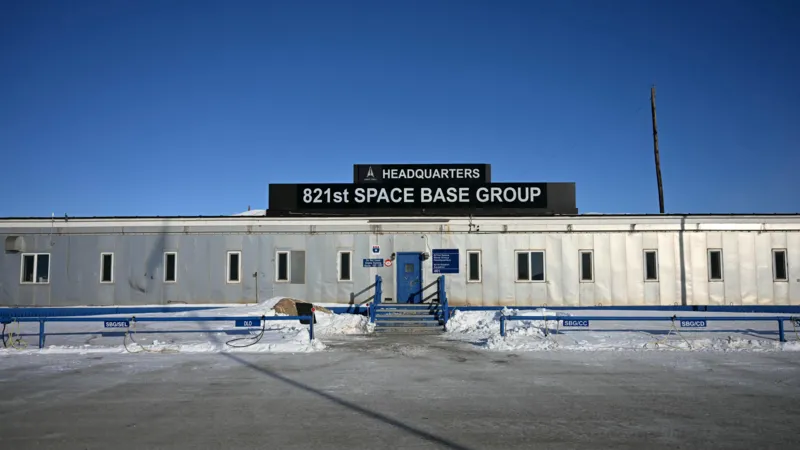
Greenland’s geographical position—between North America, Europe, and Russia—makes it one of the most strategically valuable territories on Earth. During the Cold War, it served as a critical early-warning outpost. Today, its relevance has intensified due to:
- Missile defense trajectories
- Arctic shipping routes emerging from ice melt
- Undersea infrastructure security
- Competition with Russia and China
The Greenland summit is unfolding against this backdrop of accelerating Arctic militarization.
2. Trump’s Language and the Question of Sovereignty
Donald Trump’s repeated assertion that the U.S. needs Greenland “the easy way or the hard way” has deeply unsettled both Greenlandic society and European allies. While previous U.S. administrations framed Greenland strictly within defense cooperation, Trump’s rhetoric introduces territorial ownership into the equation.
This distinction matters.
Security partnerships operate within alliance norms. Territorial acquisition—even rhetorically—challenges the foundations of NATO and international law.
3. Greenlandic Voices: “We Are Not for Sale”
Public sentiment in Greenland is unusually unified on this issue. While many Greenlanders support long-term independence from Denmark, overwhelming majorities reject U.S. sovereignty.
Statements from residents, artists, and young families reflect:
- Anxiety over loss of autonomy
- Fear of becoming a strategic pawn
- Resistance to external ownership
This internal perspective is often missing from external security debates, yet it is central to legitimacy.
4. NATO’s Internal Tension: Denmark vs the United States
The Greenland issue places NATO in an unprecedented bind:
- Denmark and the U.S. are both alliance members
- Any coercive move would fracture NATO unity
- European leaders fear a precedent that weakens collective defense norms
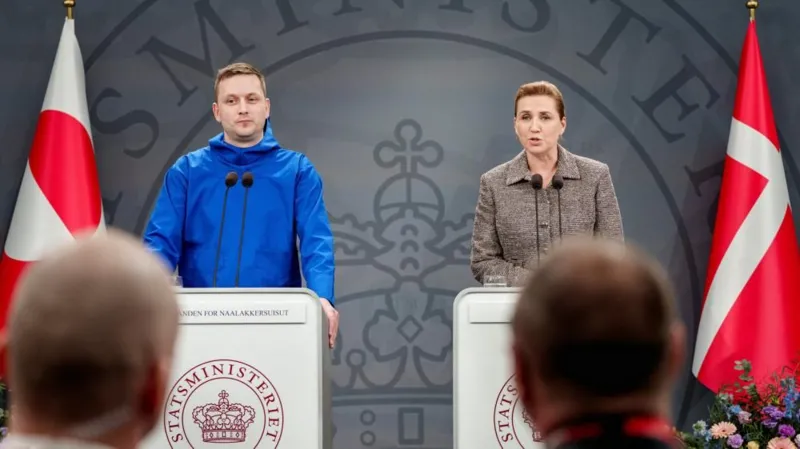
Danish Prime Minister Mette Frederiksen’s warning—that forceful U.S. control would end the transatlantic alliance as we know it—is not hyperbole. NATO relies on trust as much as hardware.
5. Europe’s Response: Militarization Without Ownership
Germany, the UK, and France are pursuing a middle path:
- Strengthening NATO’s Arctic presence
- Expanding exercises and surveillance
- Avoiding sovereignty disputes
Proposals include:
- An “Arctic Sentry” maritime mission
- Increased naval and air patrols
- Anti-drone and undersea infrastructure protection
This approach attempts to address U.S. security concerns without legitimizing territorial claims.
6. Why the Arctic Is Escalating Now
The Arctic has shifted from peripheral to central because of:
- Russia’s war in Ukraine
- Increased Russian submarine activity
- Chinese interest in Arctic shipping and minerals
- Vulnerable undersea cables and pipelines
The GIUK gap (Greenland–Iceland–UK) remains a critical chokepoint for monitoring naval movements between the Arctic and Atlantic.
7. Is This Really About Security?
Several analysts argue that economic security is equally central:
- Rare earth minerals critical for defense tech
- New shipping lanes as ice retreats
- Long-term resource access
If security alone were the concern, NATO mechanisms already exist. The emphasis on “ownership” suggests broader strategic ambitions.
8. Greenland’s Resources and the Global Scramble
Greenland’s untapped reserves of:
- Rare earth elements
- Strategic minerals
- Energy potential
place it at the heart of future industrial and defense supply chains. This explains why China, Russia, and the U.S. all view the island as indispensable.
However, investment access and military cooperation can occur without undermining sovereignty—a point emphasized by multiple policy experts.
9. The Summit as a Turning Point
Former U.S. Ambassador to NATO Julianne Smith described this week’s meeting as a turning point. The outcome will signal whether Washington prioritizes:
- Alliance cohesion
- Cooperative security
- Or unilateral expansion
For Greenland, the stakes are existential. For NATO, they are structural. For the global order, they are symbolic.
Conclusion: What Is Truly at Stake
The Greenland summit is not just about Arctic defense—it is about the rules governing power, sovereignty, and alliances in the 21st century.
If coercion replaces cooperation, the damage will extend far beyond the Arctic. If diplomacy prevails, Greenland could become a model for balancing security, autonomy, and global responsibility.
Either way, Russia and China are watching closely.
And so is history.