







Introduction: When Non-Alignment Becomes a Provocation
US South Africa tensions have taken a sharper and more public turn after Washington accused South Africa’s military of “cosying up to Iran” by allowing Iranian warships to participate in naval exercises off its coast — allegedly against instructions from Pretoria itself.
The accusation goes beyond routine diplomatic disagreement. It directly challenges South Africa’s long-standing claim of non-alignment, a cornerstone of its post-apartheid foreign policy identity.
At stake is not only South Africa’s relationship with the United States, but a larger and more uncomfortable question:
Can non-alignment still exist in a world of intensifying geopolitical blocs, or is neutrality increasingly interpreted as silent alignment?
What Triggered the Diplomatic Flashpoint?
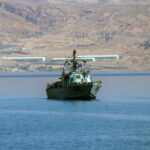
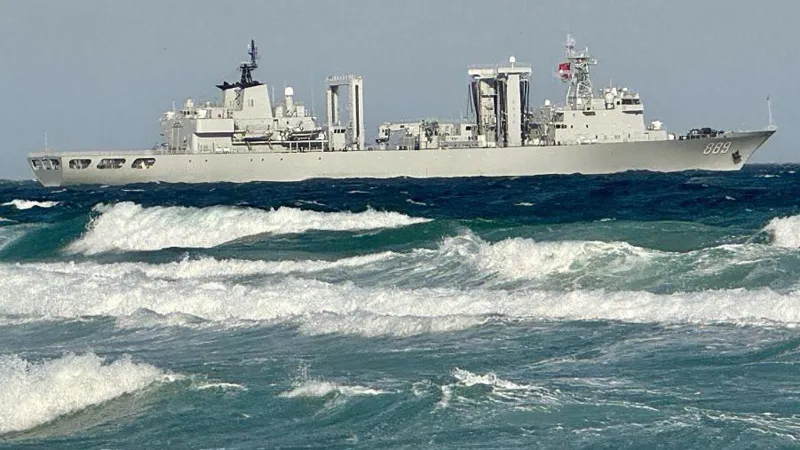
The controversy centres on “Peace Resolve,” a week-long naval exercise led by China and involving members of the expanded BRICS+ grouping, including Russia and Iran.
According to a statement from the US embassy in South Africa, Iranian warships were allowed to conduct drills in South African waters despite reported instructions from President Cyril Ramaphosa to have them sent home.
Washington described this as alarming, stating that South Africa could not credibly promote global justice while engaging militarily with a regime accused of violently suppressing protests at home.
The US embassy argued that Iran’s presence “undermined maritime security and regional stability”, particularly given ongoing human rights violations inside Iran — concerns echoed by organisations such as Amnesty International and Human Rights Watch
(see: https://www.amnesty.org and https://www.hrw.org).
South Africa’s Response: Damage Control or Institutional Drift?
South Africa’s defence ministry rejected the accusation outright and announced an internal inquiry to determine whether any orders were disobeyed.
Defence Minister Angie Motshekga’s office insisted that President Ramaphosa’s instructions had been “clearly communicated” and were to be fully implemented.
Yet the fact that Iranian warships had already docked in Cape Town when the alleged reversal occurred has raised uncomfortable questions about civilian control over the military and internal coherence within South Africa’s security establishment.
For analysts, this ambiguity is troubling. In democratic systems, even the perception that a military may disregard executive authority can have serious constitutional implications
(see: https://www.brookings.edu on civil-military relations).
Iran, Protests, and Moral Contradictions
The timing of the drills intensified the backlash.
Iran has been facing sustained protests over political repression and women’s rights, with security forces accused of lethal crackdowns. South Africa’s governing African National Congress (ANC) — historically vocal on global justice issues — has been notably quiet.
William Gumede, an associate professor at the University of the Witwatersrand, called this silence ironic, noting that South Africa’s own liberation history was built on global solidarity against repression.
This perceived moral inconsistency weakens Pretoria’s claim to principled diplomacy and exposes the tension between values-based foreign policy and strategic pragmatism.
BRICS+, Power Shifts, and Strategic Signalling
The naval drills must also be viewed through the lens of BRICS+ expansion.
Originally an economic grouping, BRICS has evolved into a loose geopolitical counterweight to Western influence. With new members such as Iran, Egypt, Ethiopia, Indonesia, and the UAE, the bloc now explicitly challenges Western-dominated institutions.
South Africa’s participation in BRICS+ initiatives — including military exercises — sends a signal, intentional or not, that it is comfortable operating within alternative power centres.
From Washington’s perspective, this looks less like neutrality and more like strategic hedging that increasingly favours rivals of the West
(see: https://www.cfr.org on BRICS geopolitics).
Is Non-Alignment Still Viable?
South Africa insists its foreign policy remains non-aligned. But the global environment has changed dramatically since the Cold War era that gave birth to the concept.
Today’s geopolitical reality is defined by systems competition — democratic versus authoritarian governance models, Western-led institutions versus alternative blocs.
In such a context, actions carry heavier symbolic weight. Hosting Iranian warships during a period of global condemnation is unlikely to be interpreted as neutral — regardless of intent.
Non-alignment, critics argue, now requires active balance, transparency, and moral consistency — not silence or ambiguity.
Why the US Is Particularly Alarmed
The US views South Africa as a pivotal regional actor:
- A G20 member
- A gateway to African markets
- A diplomatic leader on the continent
When such a country appears to drift closer to adversarial states, it raises concerns about intelligence cooperation, maritime security, and broader regional alignment.
This explains the unusually blunt tone of the US embassy’s statement — a departure from traditional diplomatic language.
What This Means for South Africa’s Global Standing
South Africa risks finding itself in a precarious position:
- Too Western for anti-US blocs
- Too ambiguous for Western allies
- Internally divided on foreign policy direction
The danger is not isolation, but strategic mistrust — where partners question Pretoria’s reliability even while continuing engagement.
In a fragmented global order, trust has become a form of currency.
Conclusion: A Foreign Policy at a Crossroads
US–South Africa tensions over Iran are not about naval drills alone. They reflect a deeper struggle over identity, alignment, and moral authority in a rapidly polarising world.
South Africa must now decide whether non-alignment is merely a historical slogan — or a demanding doctrine requiring clarity, consistency, and difficult choices.
The coming months will reveal whether Pretoria can reconcile its liberation-era values with 21st-century power politics — or whether it will continue to drift into strategic ambiguity that satisfies no one.