












Introduction
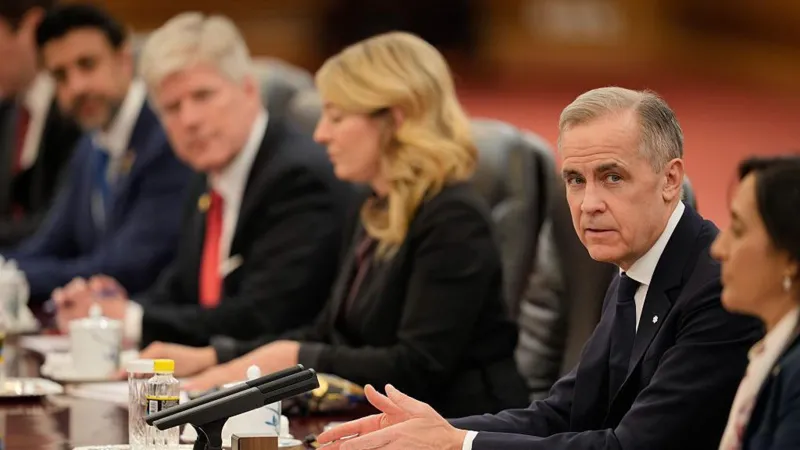
The recent China Canada trade reset marks a pivotal moment in global economic diplomacy. Following a high-stakes meeting between Canadian Prime Minister Mark Carney and Chinese President Xi Jinping in Beijing, both nations announced a tariff relief agreement that could reshape trade flows, investment patterns, and geopolitical alignments.
While the immediate headline is the reduction of tariffs—from 85% to 15% on Canadian canola oil and from a punitive rate to 6.1% on Chinese electric vehicles—the broader implications extend to international trade dynamics, domestic economic policy, and strategic competition with the United States. This raises a key analytical question: Does this agreement signal a genuine recalibration of Canada-China relations, or is it a temporary truce influenced by US tariffs?
Background Context
For over a decade, Canada-China trade relations have been a mixture of economic opportunity and political tension. China is Canada’s second-largest trading partner, yet trade has been plagued by periodic disputes, particularly in agriculture and technology sectors.
In 2024, Canada imposed 100% tariffs on Chinese electric vehicles, mirroring earlier US restrictions. China retaliated with tariffs on over $2 billion of Canadian farm exports, including canola seed and oil, resulting in a 10% drop in Canadian exports to China in 2025 (Reuters).
Against this backdrop, Carney’s visit represents Canada’s strategic pivot to diversify its trade portfolio, reducing overreliance on the US market amid fluctuating US-China tensions.
Economic Implications of the Tariff Relief
The immediate beneficiaries are Canadian agricultural producers and the automotive sector. The canola industry, long hit by Chinese levies, now has a clear export path at reduced tariffs. Similarly, the allowance of 49,000 Chinese electric vehicles at a 6.1% rate protects domestic automakers while opening the market for competitive EV imports (CBC News).
From a macroeconomic perspective, this deal could encourage further Chinese investment in Canada, particularly in green technology and energy sectors. For example, Chinese battery manufacturers and renewable energy firms may find Canada an attractive base for North American operations (Financial Times).
However, the deal also highlights Canada’s delicate balancing act: engaging China economically without compromising on human rights concerns, election interference, or sovereignty issues. Carney emphasized these “red lines” during negotiations, signaling that trade cooperation does not equal political alignment (Global Affairs Canada).
Strategic Considerations and Global Trade Relations
The timing of the Carney-Xi meeting is critical. The US’s unpredictable tariff policy has pushed Canada toward a more autonomous trade strategy. By reducing friction with China, Canada not only secures market access but also positions itself as a mediator in broader global trade realignments.
Observers argue this could encourage other countries—South Korea, Ireland, the UK, and Germany—to pursue more pragmatic engagement with Beijing. The pattern suggests China is actively signaling its stability as a reliable global trade partner, even amid geopolitical rivalries (BBC).
From a trade policy standpoint, the agreement illustrates how multilateral relationships are influenced by bilateral leverage. Canada’s recalibration shows that economic self-interest can coexist with value-based diplomacy, provided there are clear boundaries on political issues.
Risks and Limitations
Despite the positive headlines, several risks remain:
- US Reaction: As the world’s largest economy and Canada’s closest neighbor, US policy may view Canada’s pivot toward China as a challenge to the North American trade balance.
- Domestic Industry Concerns: Canadian automakers fear a sudden influx of Chinese EVs beyond the 49,000 cap could disrupt the market.
- Human Rights Issues: Engagement with China raises ethical questions, particularly regarding Taiwan, Hong Kong, and Canadian citizens previously detained in China (Al Jazeera).
- Geopolitical Volatility: The US-China rivalry continues to pose risks; any escalation could quickly undo the gains from this deal.
These risks suggest that while tariff relief is an immediate win, the long-term stability of Canada-China trade relations will depend on careful, disciplined diplomacy.
Ethical and Policy Implications
Carney’s approach demonstrates a pragmatic policy ethics balance: Canada is opening trade channels while maintaining guardrails on human rights and democratic principles. This raises broader questions for other nations:
- Can economic pragmatism coexist with value-driven foreign policy?
- To what extent should countries allow strategic rivals to gain influence via trade?
The Carney-Xi meeting serves as a case study in balancing economic opportunity with ethical responsibility, a topic highly relevant to policy analysts, trade strategists, and scholars.
Future Outlook
If implemented successfully, the agreement could catalyze:
- Diversification of Canadian trade away from US dependency
- Expanded Chinese investment in renewable energy and technology
- Increased dialogue on human rights without halting economic progress
However, vigilance is required. Both nations must monitor market responses, geopolitical reactions, and domestic sentiment to ensure that the trade reset is sustainable and mutually beneficial.
Ultimately, the China Canada trade realignment illustrates the complexity of modern international economics: markets, ethics, and geopolitics are inseparable. This dynamic will shape Canada’s position in global trade networks for decades.
Conclusion
The Carney-Xi meeting is more than a trade negotiation—it is a signal of Canada’s strategic recalibration and China’s commitment to being a global partner. While tariff relief offers immediate benefits, the broader lessons lie in navigating trade with nuance, ethics, and foresight.
This prompts the critical analytical question:
Can nations maintain ethical trade practices while competing strategically on the global stage, or are compromise and pragmatism inevitable in today’s world order?
Readers are encouraged to discuss: What does Canada’s pivot toward China mean for global trade dynamics, and can ethical principles survive in high-stakes diplomacy?