










Introduction: The Unique Challenge of Defense Technology Innovation
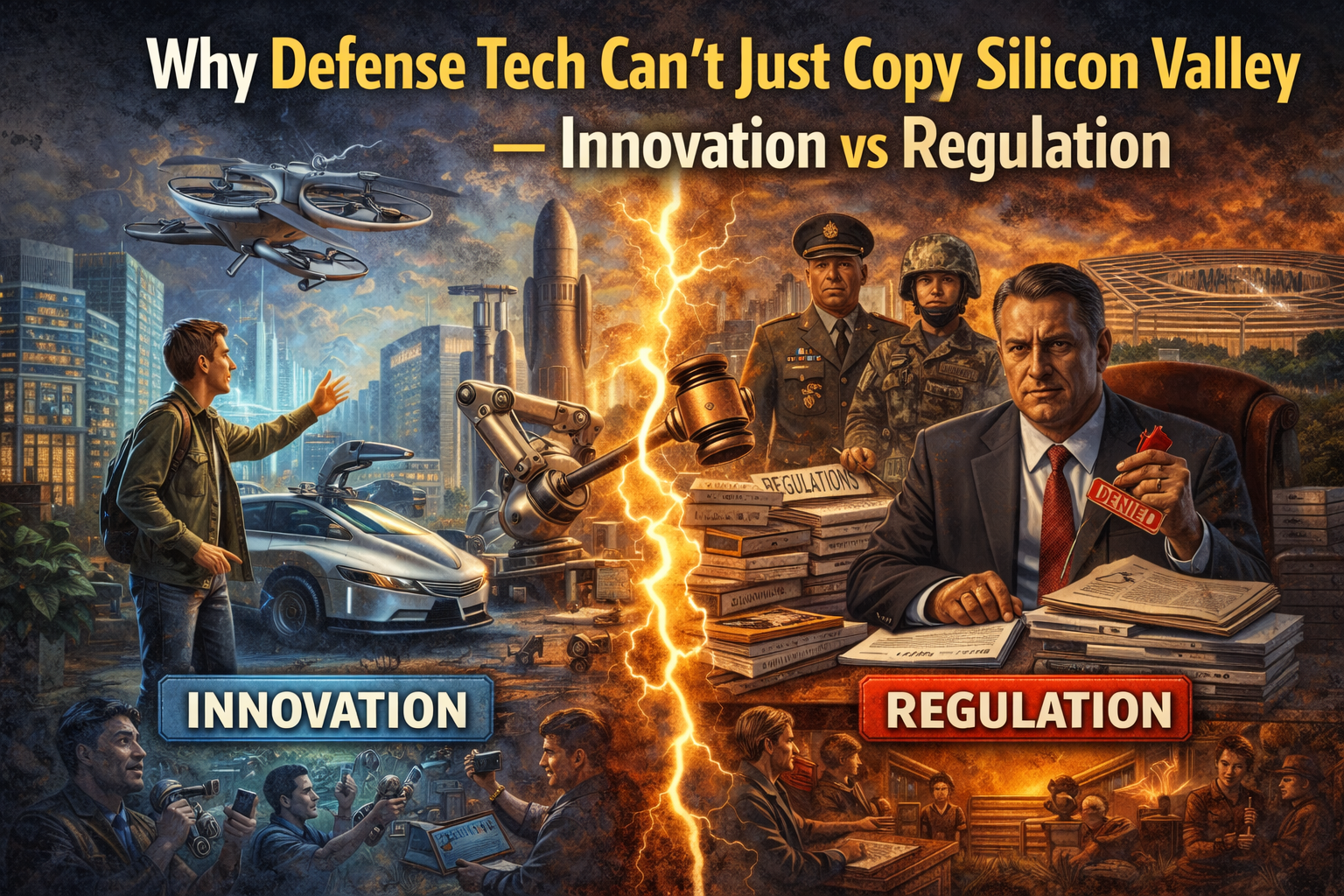
The defense technology industry is often caught in a tug-of-war between innovation and regulation. Many tech leaders argue that government rules slow progress and make it harder for startups to compete. Meanwhile, policymakers warn that rapid innovation without oversight can threaten national security, ethics, and public trust.
Silicon Valley’s famed mantra—“move fast and break things”—has driven decades of tech breakthroughs, from social media platforms to AI-powered apps. However, that mindset cannot simply be transplanted into defense technology innovation. Military tech operates in a high-stakes environment where mistakes are costly, often catastrophic, and regulations exist for critical reasons.
In this post, we explore five reasons defense technology innovation can’t just copy Silicon Valley, offering a roadmap for smart collaboration between startups, established companies, and government agencies.
1. Lives Are on the Line: The High-Stakes Nature of Defense Tech
Unlike consumer apps or entertainment software, defense technology directly impacts human lives. A coding error in a mobile app may frustrate users, but a flaw in autonomous drones, missile guidance systems, or battlefield communication tools can be fatal.
In Silicon Valley, rapid iteration and public beta testing are part of the growth model. In defense, testing on real-world systems requires extreme caution. The military cannot “break things” without risking personnel, national security, and critical infrastructure.
Example: Autonomous vehicles in the civilian market are tested extensively, but even then, fatal accidents occasionally occur. Imagine scaling that risk to AI-powered combat systems—mistakes could have geopolitical consequences, not just software bugs.
2. Regulation Is Not Optional: Compliance Shapes Innovation
One of the most significant differences between Silicon Valley and defense tech is regulatory oversight. Federal agencies like the Department of Defense (DoD), the Federal Aviation Administration (FAA), and international treaties such as the Wassenaar Arrangement impose strict compliance standards.
These regulations are designed to:
- Prevent sensitive technology from falling into adversary hands.
- Ensure safe deployment of weapon systems.
- Protect personnel and civilians from unintended consequences.
Startups accustomed to minimal oversight may find these layers restrictive. Yet, ignoring them is not an option. Companies must innovate within legal frameworks, often requiring partnerships with compliance experts, government liaisons, and legal teams.
Further reading: US Department of Defense Technology Transfer Programs
3. Cost of Failure Is Much Higher
In consumer tech, failure often means lost revenue, user churn, or bad press. In defense, the stakes are dramatically higher:
- Failed defense systems can endanger soldiers’ lives.
- National security breaches may embolden adversaries.
- Mistakes may trigger international incidents or diplomatic crises.
Case Study: The development of the F-35 Joint Strike Fighter faced delays and cost overruns, but rigorous testing and regulatory oversight prevented potentially catastrophic system failures.
This illustrates that defense technology innovation cannot shortcut testing or skip safety measures in pursuit of speed—a core principle in Silicon Valley.
4. Collaboration Between Public and Private Sectors Is Essential
Defense innovation requires a delicate balance of collaboration. Startups bring agility, creativity, and disruptive ideas. Governments provide domain knowledge, funding, and operational oversight. Both must work together without compromising security or innovation.
Successful Examples:
- Palantir Technologies partnered with the DoD to provide AI-driven analytics for military logistics and intelligence.
- SpaceX works with NASA and the US Space Force on satellite deployment and defense payloads.
For startups hoping to break into defense, understanding government procurement processes, regulations, and operational needs is just as critical as coding or engineering skills.
Further reading: Palantir and Defense Collaboration
5. Ethical Considerations Cannot Be Ignored
AI, autonomous weapons, and surveillance technologies raise profound ethical questions. Silicon Valley focuses primarily on user privacy and product ethics. Defense technology must grapple with:
- Lethal autonomous systems and accountability for mistakes.
- Data security and preventing misuse of sensitive information.
- Compliance with international law, including the Geneva Conventions.
Developers cannot simply iterate in a vacuum. Ethical review boards, oversight committees, and government-mandated frameworks guide development to ensure moral accountability.
Example: The US Department of Defense’s AI Ethics Principles require that autonomous systems are responsible, traceable, reliable, and governable.
Learn more: DoD AI Ethics Principles
How Defense Tech Can Learn From Silicon Valley Without Copying It
While the defense industry cannot replicate Silicon Valley’s “move fast and break things” culture, it can adopt key lessons to improve innovation:
- Agile Development within Safety Constraints – Use modular testing, simulations, and sandbox environments to iterate quickly without risking lives.
- Public-Private Innovation Hubs – Programs like the DoD’s Defense Innovation Unit (DIU) bridge startups and government agencies.
- Cross-Sector Talent Exchange – Encourage engineers and data scientists from tech companies to collaborate with defense specialists.
- Flexible Funding Models – Apply venture-style funding approaches while maintaining compliance with regulations.
By adapting these lessons thoughtfully, the defense sector can innovate without compromising security, ethics, or safety.
Further reading: Defense Innovation Unit
The Path Forward: Smart Collaboration, Not Copying
The key to advancing defense technology innovation lies in smart collaboration. Governments, startups, and established defense contractors must create ecosystems that encourage creativity while maintaining strict oversight.
This approach balances two seemingly opposing forces: the need for rapid technological advancement and the imperative of public trust, ethical responsibility, and national security.
Silicon Valley’s lessons are valuable, but only when adapted to the defense context. Trying to copy its model wholesale can lead to catastrophic consequences, wasted resources, and ethical violations.
Conclusion: 5 Key Takeaways
- Lives are at stake in defense, making mistakes far costlier than in consumer tech.
- Regulatory compliance shapes innovation and ensures national security.
- The cost of failure extends beyond finances to diplomacy, safety, and global stability.
- Collaboration between the public and private sectors is essential for sustainable innovation.
- Ethical considerations are mandatory, guiding AI and autonomous technologies in responsible directions.
Defense technology innovation cannot simply copy Silicon Valley, but by learning its principles selectively, the industry can accelerate breakthroughs safely, ethically, and effectively.
The future of defense depends on smart, responsible innovation—and the ability of governments and startups to work together without compromising on safety or security.