



Iran Protests US Intervention Amid Deadly Crackdown
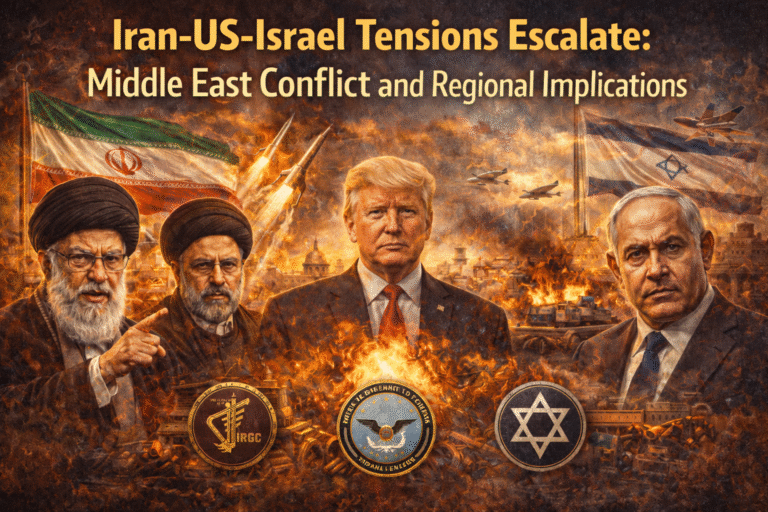
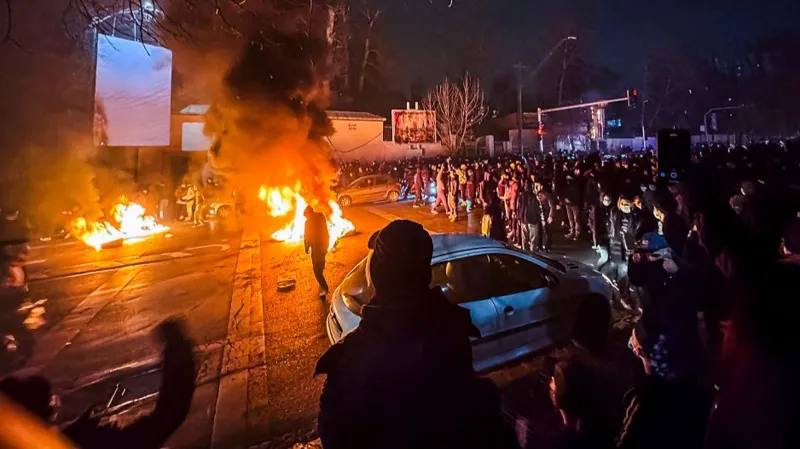
Iran protests US intervention at a moment of extreme internal unrest, as security forces respond to nationwide demonstrations with lethal force. What began as protests over soaring inflation has rapidly escalated into a direct challenge to Iran’s clerical leadership, with calls for an end to the rule of Supreme Leader Ayatollah Ali Khamenei.
As hundreds of protesters are reported dead and thousands more injured or detained, the United States has warned it may intervene. President Donald Trump said Iranian leaders had reached out seeking negotiations, yet he also stated that the US “may have to act before a meeting,” adding that “very strong options” are under consideration.
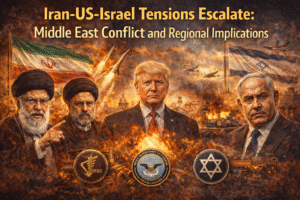
Tehran has responded with a clear warning: any US attack will be met with retaliation, raising fears that domestic unrest could ignite a wider regional conflict.
Iran Protests US Intervention: Why the Crisis Is Escalating
The protests, initially triggered by economic hardship and inflation, have evolved into the most serious challenge to Iran’s political system since the 2022 “Women, Life, Freedom” uprising. Demonstrators are no longer demanding reforms alone; many are openly calling for regime change.
Iranian authorities have framed the unrest as foreign-backed sabotage. Senior officials have accused the United States and Israel of orchestrating the protests, claiming that outside forces are fueling instability. Iran’s attorney general has declared protesters “enemies of God,” a charge that carries the death penalty, while Ayatollah Khamenei has dismissed demonstrators as vandals acting to “please” Washington.
At the same time, verified footage and eyewitness accounts confirm that Iranian security forces have fired live ammunition at protesters in multiple cities, including Tehran, Kermanshah, Bushehr, and Ilam.
5 Dangerous Risks as Iran Protests US Intervention and Threatens Retaliation
Risk 1: Regional War as Iran Protests US Intervention Intensify
Iran’s parliament speaker has warned that if the United States attacks, US and Israeli military targets and regional shipping routes would become legitimate targets. This threat dramatically raises the stakes.
Any military escalation could spread beyond Iran, potentially destabilizing Israel, the Persian Gulf, and key energy transit routes such as the Strait of Hormuz. Even a limited strike risks spiraling into a broader Middle East conflict with global economic consequences.
Risk 2: Human Rights Collapse During Iran Protests US Intervention
Hospitals across Iran have reportedly been overwhelmed by the wounded and dead. BBC Persian has verified dozens of bodies arriving at single hospitals in one night, with medical workers describing gunshot wounds to the head and chest.
Video footage from Tehran shows rows of body bags in morgues, while families search desperately for missing relatives. Human rights groups warn that the scale of violence may exceed that of previous protest crackdowns.
As Iran protests US intervention, the danger is that escalating geopolitical tensions will further obscure accountability for human rights violations, allowing repression to intensify behind the fog of international crisis.
Risk 3: Internet Shutdowns and Information Control
One of the most alarming developments during the Iran protests US intervention crisis is the near-total internet shutdown imposed by Iranian authorities. Access to the global internet—and even parts of the domestic network—has been severely restricted.
Experts say the blackout is more severe than during past uprisings. The shutdown limits protest coordination, prevents independent verification of events, and shields state violence from international scrutiny.
Some Iranians may still connect via satellite services such as Starlink, but experts warn these connections could be monitored, putting users at extreme risk.
Risk 4: US Military Miscalculation
While Washington has not confirmed plans for direct military action, officials have acknowledged that options under review include targeted strikes, cyber operations, and expanded sanctions.
Strategic ambiguity is intended to pressure Tehran, but it also increases the risk of miscalculation. Iran protests US intervention at a moment when emotions are high, communication channels are strained, and any incident could rapidly escalate beyond control.
History shows that limited actions in the Middle East often produce unintended and long-lasting consequences.
Risk 5: Long-Term Destabilization of the Middle East
Even if the current crisis does not lead to immediate war, its long-term effects could be profound. A weakened Iranian state facing sustained unrest may act more aggressively abroad to project strength at home.
Regional actors, already navigating conflicts in Gaza, Lebanon, and Yemen, would be forced to recalibrate their security strategies. Energy markets, global shipping, and diplomatic alliances could all feel the ripple effects.
As Iran protests US intervention, the risk is not just escalation, but enduring instability that reshapes the region for years to come.
Can Diplomacy Work While Iran Protests US Intervention Continue?
Despite the rising tensions, diplomacy has not entirely disappeared. President Trump’s claim that Iranian leaders want to negotiate suggests that back-channel communication remains open.
However, meaningful dialogue will be difficult while protests are met with mass arrests, live fire, and information blackouts. Any diplomatic process that ignores the human rights dimension risks lacking legitimacy both inside Iran and internationally.
A viable path forward would require de-escalation on multiple fronts: restraint by security forces, restoration of internet access, international monitoring, and sustained diplomatic engagement.
Iran Protests US Intervention: Key Questions
Why are Iran protests linked to US intervention?
Iranian leaders accuse the US of encouraging unrest, while Washington condemns the violent crackdown, increasing diplomatic and military tension.
Has the US intervened militarily in Iran before?
The US has not launched a full-scale military intervention but has used sanctions, cyber operations, and covert actions against Iranian interests.
Could Iran protests US intervention trigger a wider war?
Yes. Retaliation threats against US and Israeli targets significantly raise the risk of regional escalation.
Conclusion: A Crisis Testing Global Red Lines
Iran protests US intervention at a moment when domestic repression and international brinkmanship are colliding. The outcome will depend not only on decisions made in Tehran and Washington, but on whether global actors can prevent human suffering from becoming the pretext for another devastating conflict.
The world now faces a familiar yet urgent question: how to defend human rights without igniting war. The answer will shape Iran’s future—and the stability of the Middle East.
Background on Iran’s protest movements and state repression