










Introduction: A Historic Investigation
In a development that has rocked the US political and financial landscape, the US Justice Department has opened a criminal probe into Federal Reserve Chairman Jerome Powell. Announced publicly by Powell on Sunday, the investigation involves subpoenas and potential criminal charges linked to his Senate testimony on renovations to Federal Reserve buildings. The probe, described by Powell as “unprecedented,” comes amid growing tensions with President Donald Trump, who has repeatedly pressured the Fed to lower interest rates.
This situation raises profound questions about the independence of the Federal Reserve, the role of political influence in monetary policy, and the potential implications for the broader US economy.
Jerome Powell Speaks Out
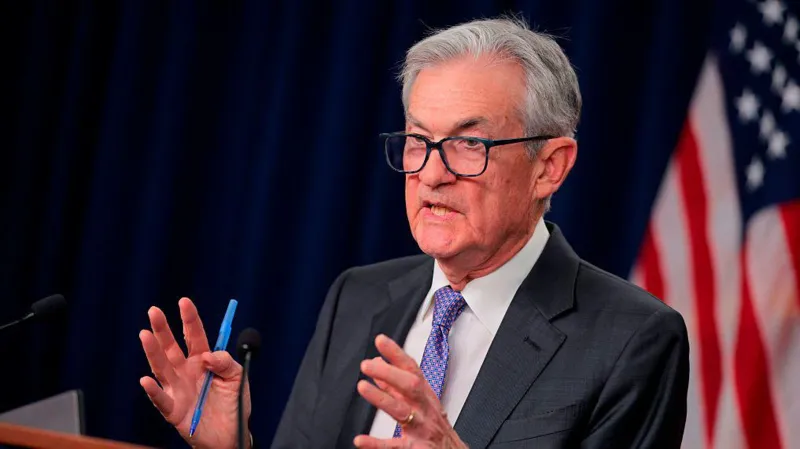
Powell addressed the nation in a video statement, emphasizing the unprecedented nature of the probe. He framed the investigation as a potential threat to the Federal Reserve’s ability to operate independently, stating:
“This is about whether the Fed will be able to continue to set interest rates based on evidence and economic conditions, or whether instead monetary policy will be directed by political pressure or intimidation.”
Powell stressed his respect for the rule of law but warned that the probe should be understood in the context of ongoing political pressure from the White House. He implied that his refusal to adjust interest rates under Trump’s direct demands may have triggered the investigation.
Trump’s Reaction and the Political Context
President Trump publicly distanced himself from the probe, claiming in an NBC News interview:
“I don’t know anything about it, but he’s certainly not very good at the Fed, and he’s not very good at building buildings.”
The tensions are long-standing. Since his nomination of Powell in 2017, Trump has repeatedly expressed frustration with the Fed’s measured approach to interest rates. Despite three rate cuts in the second half of 2025, the president has continued to call for lower rates, blaming economic pressures and inflation on prior administrations and the Federal Reserve’s policies.
The Renovation Controversy
The probe reportedly centers on renovations at two Fed buildings: the Eccles Building and 1951 Constitution Avenue. These renovations, the first in nearly a century, include critical health and safety upgrades, including the removal of asbestos and lead. While the Fed estimates the project will cost $2.5 billion, Trump has publicly criticized ballooning expenses, citing $3.1 billion as the likely cost.
Critics argue that using a criminal investigation to scrutinize building renovations is politically motivated and unprecedented in US history.
Economic Implications of the Probe
The criminal investigation has immediate financial consequences. Investors view attacks on the Federal Reserve as a potential threat to market stability and monetary policy independence. Precious metals, traditionally safe-haven assets, spiked:
- Gold: Rose 1.4% to $4,572.36 per ounce, with an intraday peak of $4,600.33
- Silver: Hit $84.58 per ounce before settling at $83.26, a 5.4% increase
Economists warn that uncertainty around the Fed’s independence could lead to volatility in interest rates, bond yields, and the US dollar, impacting everything from mortgage rates to consumer spending.
The Political Fallout
Several US senators have voiced concern over the probe:
- Senator Thom Tillis (R-NC): Opposes any Trump nominee to the Fed until the legal matter is resolved.
- Senator Elizabeth Warren (D-MA): Warns that Trump intends to remove Powell and replace him with a loyalist, undermining the Fed’s credibility.
The political context echoes prior investigations against high-profile figures during Trump’s administration, such as former FBI Director James Comey and New York Attorney General Letitia James. Both cases were criticized for being politically charged, with courts dismissing charges or blocking prosecutions.
Historical Perspective: Fed Independence Under Threat
The Federal Reserve Act established the Fed as an independent central bank to prevent political interference in monetary policy. The current probe represents a direct challenge to this independence, raising concerns about the politicization of monetary policy.
If the Justice Department pursues criminal charges against Powell, it could set a dangerous precedent, potentially eroding investor confidence and destabilizing financial markets.
International Ramifications
Markets around the globe monitor US monetary policy closely. Any perception of political interference in the Fed’s decisions could affect:
- Foreign investment: Investors may demand higher yields on US debt.
- Currency markets: The dollar could weaken amid uncertainty.
- Global interest rates: Central banks may hesitate to adjust policies due to US instability.
In addition, geopolitical tensions—such as unrest in Iran and rising inflation—compound the economic uncertainty.
Legal Experts Weigh In
Legal scholars argue that the probe is both legally and politically complex. Issues under scrutiny include:
- Subpoena compliance and potential misrepresentation in Senate testimony
- Allocation of funds for building renovations
- Influence of presidential pressure on independent agencies
Observers note that proving criminal intent in administrative testimony is challenging, meaning the investigation may be as much about political signaling as legal accountability.
The Broader Implications for US Democracy
The investigation is more than a legal matter; it is a test of democratic institutions. Experts warn that using the Justice Department to pressure a Federal Reserve Chair could erode trust in:
- Independent oversight: The Fed’s decisions rely on economic expertise rather than political agendas.
- Rule of law: Prosecutorial discretion must remain free from political influence.
- Institutional integrity: The Fed’s credibility is critical for maintaining financial stability.
Powell himself highlighted the stakes:
“No one, certainly not the chair of the Federal Reserve, is above the law—but this unprecedented action should be seen in the broader context of the administration’s threats and ongoing pressure.”
What Happens Next?
The US Attorney’s Office for the District of Columbia will oversee the investigation. Observers anticipate:
- Close monitoring of Senate confirmations for Fed nominees
- Heightened scrutiny on Fed interest rate decisions
- Increased market volatility amid uncertainty
Legal and financial analysts predict that the case could take months, or even longer, to resolve, with potential appeals and political maneuvering shaping the outcome.
Conclusion: A Defining Moment for the Federal Reserve
The criminal probe into Jerome Powell marks an unprecedented moment in US economic and political history. It raises questions about:
- The independence of central banking
- The politicization of justice
- Market confidence and economic stability
As the nation watches closely, Powell’s handling of the probe, the Fed’s policies, and the White House’s actions will define the boundaries of political influence over the country’s most important financial institution.
Read more about Federal Reserve independence and US monetary policy:
Brookings Institution – The Federal Reserve and Political Independence