










Meta Nuclear Power Plan: Fueling AI Ambitions or a Bold Energy Gamble?
Meta, the parent company of Facebook, has unveiled an ambitious nuclear-power plan aimed at supporting its rapidly growing AI infrastructure. By partnering with advanced nuclear startups such as Oklo and Bill Gates-backed TerraPower, alongside energy provider Vistra, Meta is signaling a new era where tech giants may increasingly control not just digital platforms, but the very energy that powers them.
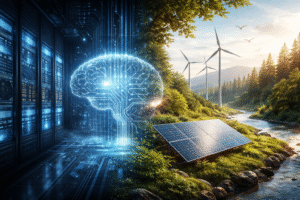
This is not just about electricity — it is about scaling AI at unprecedented speeds while managing enormous energy costs. For context, modern AI models require data centers that consume vast amounts of power, often rivaling small cities. Meta’s nuclear strategy attempts to solve two challenges simultaneously: sustainable energy supply and the massive energy demands of AI operations.
Why Nuclear Power?
While renewable sources such as solar and wind are growing, they remain intermittent and cannot reliably power AI servers 24/7 without costly battery storage. Nuclear energy, in contrast, offers:
- High and consistent output
- Low-carbon footprint compared to fossil fuels
- Scalability to match exponential AI growth
By investing in advanced nuclear technologies, Meta aims to secure control over its energy supply, mitigating risks from volatile energy markets and regulatory uncertainty.
Partners in Innovation
Meta is backing several key nuclear ventures:
- Oklo – Specializes in compact, small modular reactors that could power local data centers.
- TerraPower – Bill Gates-backed company developing next-generation nuclear technology.
- Vistra – Established energy provider, providing operational and grid integration expertise.
This partnership strategy merges cutting-edge innovation with practical energy deployment, potentially giving Meta a first-mover advantage in energy-secured AI computation.
The AI-Energy Nexus
AI development is energy-intensive. Training state-of-the-art models consumes terawatt-hours annually, producing substantial carbon emissions. Meta’s nuclear plan positions the company at the intersection of tech growth and sustainable energy — a bold statement in an era where ESG (environmental, social, governance) pressures influence corporate reputations.
Some analysts suggest that securing reliable nuclear energy could enable Meta to accelerate AI development faster than competitors while reducing operational costs. Others question whether nuclear projects, often expensive and slow to deploy, can realistically meet near-term AI demand.
Risks and Challenges
Despite its potential, Meta’s nuclear push carries notable risks:
- Regulatory hurdles – Nuclear projects face strict safety, licensing, and political oversight.
- High capital expenditure – Building and operating nuclear reactors is extremely costly.
- Public perception – Nuclear energy remains controversial due to safety concerns.
Even with partners like TerraPower and Oklo, Meta may encounter delays or local resistance that slow implementation, potentially offsetting AI energy gains.
Strategic Implications
Meta’s nuclear strategy highlights a broader trend: tech giants are moving into critical infrastructure domains, traditionally dominated by governments. By controlling energy supply, Meta reduces exposure to grid instability, energy price shocks, and policy constraints — all crucial when powering AI systems that demand uninterrupted operation.
Moreover, such investments could reshape the energy market, giving private tech corporations significant leverage in clean energy innovation and policy discussions.
Debating the Broader Question
Meta’s nuclear plan invites critical questions:
- Is this a model for sustainable AI development, combining low-carbon energy with tech growth?
- Or does it reflect a corporate concentration of power, where private companies dominate essential services like energy?
- Can nuclear energy realistically scale fast enough to meet the explosive growth of AI computation?
The answers will likely determine not only Meta’s competitive advantage but also the trajectory of energy-tech integration globally.
Conclusion
Meta’s nuclear power initiative is ambitious, innovative, and controversial. It signals a future where energy security and AI supremacy are intimately linked, and where corporations may wield unprecedented influence over both technology and infrastructure.
Whether this venture succeeds or stumbles, it is a harbinger of a new era — one in which the race for AI dominance may be decided as much by megawatts as by algorithms.