










Oreshnik Missile Ukraine: A Strike That Signals More Than Destruction
Russia’s deployment of the Oreshnik missile in Ukraine marks a significant escalation not only in military capability but in strategic messaging. Used only for the second time since its debut in late 2024, the hypersonic ballistic missile was launched during a massive overnight assault that killed civilians, disrupted energy infrastructure, and sent shockwaves across Europe.
The choice of weapon, timing, and geographic proximity to NATO territory suggest that this was not merely another battlefield strike. Instead, the Oreshnik missile i appears to function as a geopolitical signal — aimed as much at Western capitals as at Kyiv.
What Is the Oreshnik Missile and Why Does It Matter?
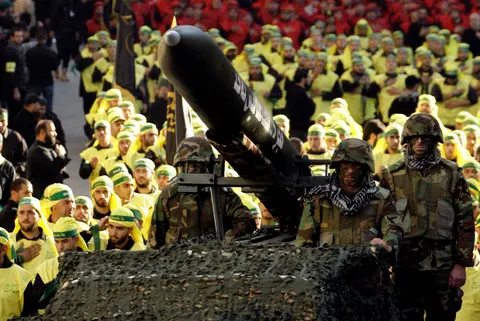
The Oreshnik missile is an intermediate-range hypersonic ballistic system capable of traveling up to 5,500 kilometers. Unlike conventional ballistic missiles, it is believed to deploy a fragmenting warhead that releases multiple inert projectiles during its final descent, creating repeated explosions moments apart.
This design complicates interception, overwhelms air defense systems, and amplifies psychological impact. In modern warfare, such weapons are as much about deterrence and intimidation as they are about physical destruction.
Its rare usage underscores its strategic value. When a state deploys an advanced weapon sparingly, it is often to make a point — not to gain tactical advantage alone.
Oreshnik Missile Ukraine: Why Strike Near the NATO Border?
One of the most alarming aspects of the Oreshnik missile strike in Ukraine was its reported impact near Lviv, approximately 60 kilometers from the Polish border. This places the attack uncomfortably close to NATO territory.
Ukrainian officials immediately framed the strike as a test of transatlantic resolve, warning that such actions represent a direct challenge to European security. From a strategic standpoint, the location matters as much as the weapon itself.
By operating near NATO’s eastern flank, Russia reinforces several messages:
- It can escalate at will
- It can do so close to alliance borders
- It is prepared to normalize hypersonic weapon use
Energy Infrastructure and the Weaponization of Winter
As with many recent attacks, Russia targeted energy infrastructure, leaving parts of Kyiv without power amid sub-zero temperatures. This strategy has become a recurring feature of the war — transforming basic survival needs into instruments of pressure.
The use of the Oreshnik missile in Ukraine alongside drone swarms and conventional missiles reflects a layered approach: physical damage, civilian hardship, and political signaling rolled into one campaign.
Ukraine has responded in kind, striking energy facilities inside Russia, including power infrastructure in Belgorod and Oryol. The conflict has evolved into a reciprocal campaign of infrastructure warfare, raising serious humanitarian and legal concerns.
Hypersonic Weapons and the Future of European Security
Hypersonic weapons like the Oreshnik occupy a dangerous gray zone in international security. They travel faster, evade defenses more easily, and compress decision-making timelines for governments.
Their deployment in Ukraine accelerates several destabilizing trends:
- Reduced warning time for neighboring states
- Increased risk of miscalculation
- Pressure on NATO missile defense posture
If hypersonic strikes become normalized near EU borders, European defense planning will face unprecedented strain.
Russia’s Stated Justification and Global Skepticism
Moscow claims the strike was retaliation for an alleged Ukrainian drone attack on President Vladimir Putin’s residence — an assertion Kyiv denies and Western leaders openly doubt.
The lack of credible evidence has fueled skepticism that the justification is secondary to the broader strategic objective: reminding the West that Russia retains escalation dominance.
As one EU diplomat privately noted, weapons like the Oreshnik are deployed less to win battles than to shape narratives and perceptions.
Double-Tap Strikes and the Laws of War
One of the most troubling reports from Kyiv was the use of a “double-tap” strike, where a second missile hits shortly after the first, killing rescuers and first responders.
Such tactics have drawn condemnation from human rights organizations and raise questions about compliance with international humanitarian law. The death of a paramedic responding to the initial blast underscores the human cost behind strategic calculations.
Is the Oreshnik Missile Ukraine’s Warning Shot to the West?
Seen in isolation, the strike is devastating. Seen in context, it is instructive.
The Oreshnik missile strike in Ukraine serves as:
- A technological demonstration
- A warning to NATO
- A stress test of Western restraint
It asks a dangerous question: How close can Russia push advanced weapon use to NATO territory without triggering a direct response?
So far, the answer appears to be: closer than many expected.
Conclusion: A Missile That Changes the Conversation
The Oreshnik missile is not just another weapon in Russia’s arsenal — it is a symbol of how this war is evolving. Its use suggests a shift toward strategic intimidation, technological signaling, and normalization of extreme escalation near Europe’s borders.
Whether NATO responds with deterrence, restraint, or recalibration will shape not only the future of Ukraine, but the broader security architecture of the continent.
One thing is clear: the conversation is no longer about if hypersonic weapons will shape European security — but how soon.
BBC News – reporting on the Oreshnik missile strike and Ukraine conflict