









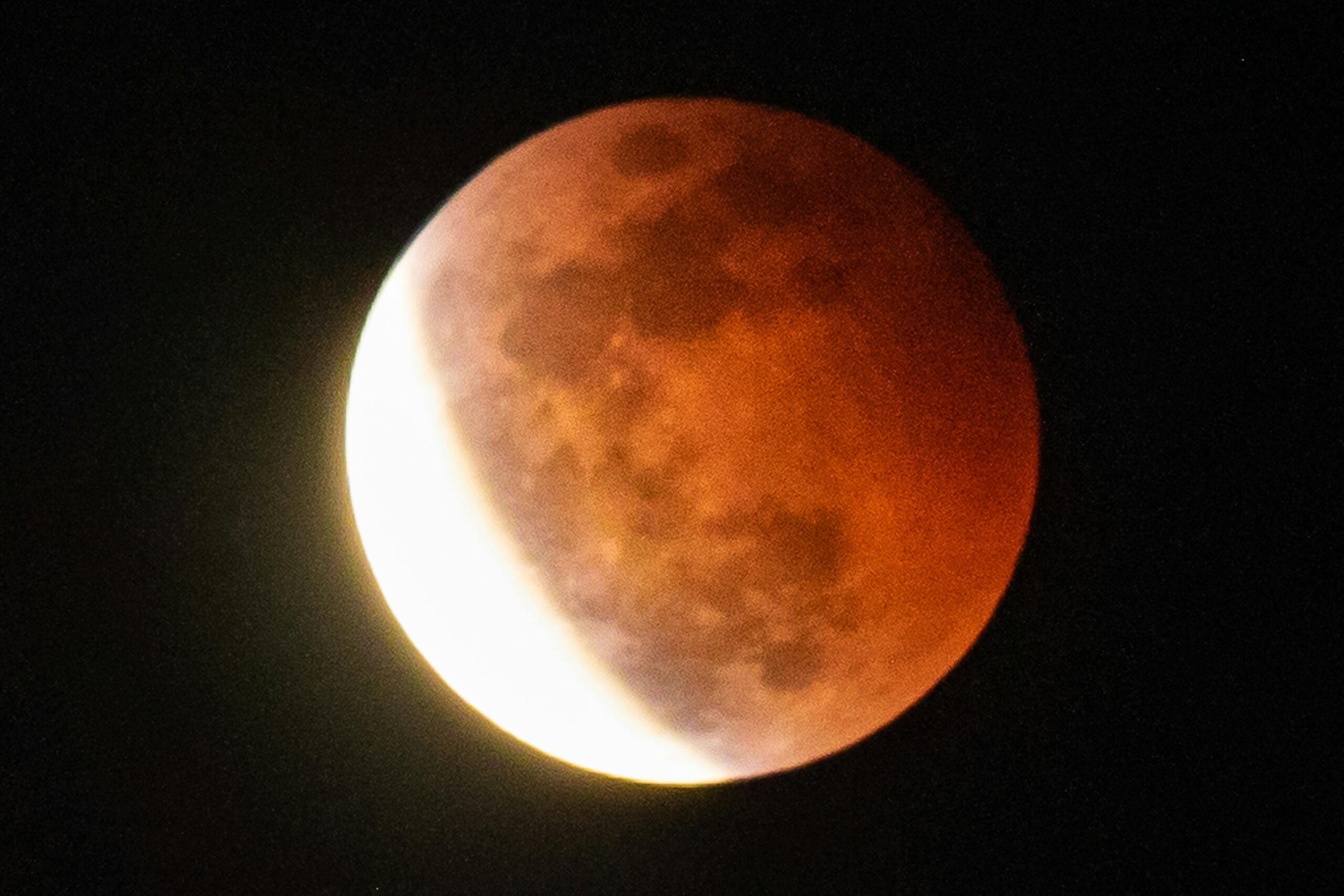
How to See the Total Lunar Eclipse and Blood Moon on September 7
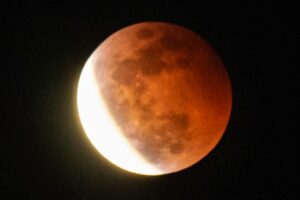
On the evening of September 7, 2025, skywatchers will witness one of nature’s most dramatic celestial spectacles: the Total Lunar Eclipse and Blood Moon. This will be the second—and final—total lunar eclipse of the year, promising a stunning red-hued moon that has inspired myths, science debates, and countless photographs across generations.
But here’s the catch: not everyone will get a front-row seat. While much of Africa, Asia, and Australia will enjoy a clear view of this cosmic event, skywatchers across the Americas will have to settle for watching it online. And that gap between who gets to see the real thing and who doesn’t is already sparking heated discussions among space enthusiasts.
What Makes a Blood Moon Happen?
A total lunar eclipse takes place when Earth positions itself perfectly between the sun and the moon. Rather than vanishing into darkness, the moon turns a deep shade of red—a sight that has fascinated cultures for centuries.
This fiery glow is caused by a scientific effect called Rayleigh scattering. When sunlight passes through Earth’s atmosphere, shorter blue wavelengths scatter outward, while longer red wavelengths bend and filter into Earth’s shadow. This natural filter projects a coppery-red glow onto the moon’s surface, creating what we call the Blood Moon.
For some, this is pure science. For others, it carries spiritual, cultural, or even ominous significance. It’s a reminder that while astronomy explains the mechanics, human interpretation gives it meaning.
When and Where to See the September 7 Total Lunar Eclipse and Blood Moon
According to Timeanddate.com, the totality phase—the period when the moon is fully engulfed in Earth’s shadow—will begin at 17:30 UTC. The moment of maximum eclipse will arrive about 40 minutes later, at 18:11 UTC, and totality will last for roughly 1 hour and 20 minutes.
- Visible regions: Asia, Eastern and Central Africa, and Australia.
- Not visible: North and South America (viewers here must tune into online streams).
For those in non-viewing zones, the Virtual Telescope Project, led by Italian astrophysicist Gianluca Masi, will broadcast the event live on YouTube, ensuring no one completely misses out.
The Blood Moon’s Added Twist: A Larger Appearance
Interestingly, this eclipse falls just three days before the moon reaches perigee, the point where the moon is closest to Earth in its orbit. That means it will appear slightly larger than usual, intensifying the drama of the red hue.
For stargazers with telescopes or even just a good pair of binoculars, this could be one of the most breathtaking lunar eclipses in recent memory.
Why This Event is Stirring Debate
The science is fascinating, but the social reactions are just as compelling. The Total Lunar Eclipse and Blood Moon often ignite spirited conversations, from astronomy forums to spiritual circles.
- Some see the event purely as a scientific phenomenon, emphasizing how predictable and measurable lunar eclipses are.
- Others interpret the Blood Moon as symbolic—tied to cultural traditions, biblical prophecy, or spiritual awakenings.
- Meanwhile, there’s the question of equity in experience: Shouldn’t something as universal as the moon belong equally to everyone? Why should half the planet get the real show while the rest of us stream it through a screen?
These contrasting perspectives make the September 7 eclipse more than just an astronomical event—it’s also a cultural and philosophical conversation starter.
Looking Ahead: The Next Total Lunar Eclipse
If you miss this one, don’t despair. The next total lunar eclipse is set for March 2026, and it will favor North America, East Asia, and Australia. That’s great news for viewers in the United States, who will finally get another chance to see the Blood Moon without relying on livestreams.
Final Thoughts: Science, Symbolism, and Shared Wonder
The upcoming Total Lunar Eclipse and Blood Moon on September 7 is more than just a rare alignment of Earth, sun, and moon. It’s a chance to reflect on how we interpret cosmic events differently—through the lenses of science, spirituality, and human imagination.
So, will you be outside watching the sky, or inside debating its meaning?
👉 Join the conversation below—do you see the Blood Moon as pure science, or as something deeper?