





Venezuelan Political Prisoner Release: Real Reform or Strategic Gesture in a Shifting Power Game?
The Venezuelan political prisoner release announced this week is being widely framed as a goodwill gesture by the country’s interim authorities. With dozens of detainees, including foreign nationals such as Spanish‑Venezuelan activist Rocío San Miguel, already freed, the move has drawn cautious optimism from rights groups — but also serious questions about timing, context and intent. Tribune Online+1
This development arrives in the aftermath of a dramatic U.S. operation that saw Venezuela’s former president, Nicolás Maduro, arrested and removed from power. The political prisoner release is therefore bound up with larger trajectories of power, legitimacy, and diplomatic leverage — not simply an act of clemency. Reuters
Shifting Political Context: From Repression to Conditional Release
Venezuela has long faced international criticism for its detention of activists, opposition figures, journalists and others viewed by human rights organizations as political prisoners — a term the government has historically rejected. PBS
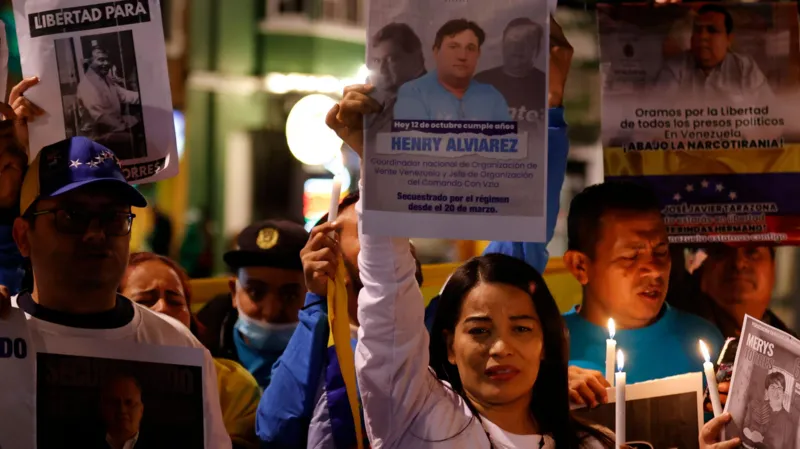
According to local watchdogs like Foro Penal and the Penal Forum, more than 800 people were detained for political reasons as of late 2025, most in facilities like the notorious El Helicoide prison — condemned by rights groups and U.N. observers for torture and incommunicado detention. Anadolu Ajansı
What differentiates the Venezuelan political prisoner release announced this week is not only its scale, but its timing: it comes after Maduro’s removal and with statements that the move is intended to foster “unity and peaceful coexistence.” Tribune Online
National Unity or International Strategy?
This raises a critical question: is this release genuinely intended to shift Venezuela’s internal political climate, or is it primarily a strategic move designed to reshape relationships with external actors — especially the United States and European nations? WLRN
Support from the U.S. — which for years has demanded such releases — has become a significant pressure point. President Donald Trump’s administration publicly welcomed the releases and has cited them as part of broader cooperation, even as it continues to influence Venezuela’s political transition. Reuters
Domestic actors inside Venezuela are also interpreting the move through different lenses. Interim government officials call it a unilateral gesture toward peace. Human rights groups welcome the step but emphasize it is insufficient and opaque. WLRN
The Human Cost of Arbitrary Detention
Behind political narratives, the reality for detainees and their families has been deeply traumatic. Long periods of detention — often without meaningful legal transparency — have severed family ties and eroded trust in state institutions. PBS
For families still waiting, the Venezuelan political prisoner release represents not just a policy shift but the possible return of loved ones whose lives were put on hold by a legal system widely criticized for political bias.
What Counts as a “Political Prisoner”?
A central debate in the politics of detention is the distinction between criminal charges and political repression — and Venezuela’s government has repeatedly denied holding political prisoners, asserting that detainees were arrested for genuine crimes. WLRN
Yet the scale of documented cases and testimonies compiled by groups like Human Rights Watch highlight patterns of politically motivated detention, including incommunicado imprisonment and denial of access to legal counsel. Human Rights Watch
This makes the term “political prisoner” not merely semantic, but fundamental to how society understands justice, dissent and the rule of law.
International Dimensions and Foreign Nationals
The release of foreign citizens — including several Spanish nationals confirmed by Spain’s foreign ministry — adds a diplomatic layer to the Venezuelan political prisoner release. Tribune Online
It signals that international governments are closely watching and may prioritize the safety of their citizens entangled in Venezuela’s internal politics, especially in light of rising tensions following the U.S. operation that ousted Maduro.
Is Freedom Conditional or Genuine?
One point of skepticism among critics is whether the released detainees truly enjoy full freedom or are subject to ongoing restrictions — such as travel bans, required court reporting, or limitations on political activity — as in past release programs. MercoPress
If conditions persist, that calls into question whether the Venezuelan political prisoner release constitutes meaningful reform or a symbolic concession to international expectations.
The Opposition Perspective
Opposition leaders — including Nobel Peace Prize laureate María Corina Machado — have welcomed the releases with cautious optimism, framing them as moves toward justice while reiterating that much work remains to secure democratic freedoms. CiberCuba
Their perspective highlights that political prisoner issues sit at the heart of Venezuela’s contested democratic transition, with far-reaching implications for elections, civic rights, and political participation.
Long-Term Implications for Venezuelan Governance
The Venezuelan political prisoner release is not merely a humanitarian gesture. It could affect:
- Venezuela’s human rights reputation
- Negotiations between domestic political factions
- Foreign relations with the United States and EU
- Future democratic processes
However, without transparency on numbers, conditions of release, and follow‑up legal reforms, the current gesture may prove temporary rather than transformative. Anadolu Ajansı
Conclusion: Gesture of Peace or Strategic Realignment?
The release of political prisoners in Venezuela captures a moment of potential transition — but also deep uncertainty.
Is this a genuine step toward justice and political pluralism? Or is it a tactical move conditioned by external pressure and internal political calculations?
As families reunite and international governments respond, the real test of this release will be:
- whether detainees continue to regain full rights,
- whether mass releases follow, and
- whether political dissent is decriminalized in law as well as practice.
The Venezuelan political prisoner release may be a beginning — not a conclusion — to Venezuela’s difficult path toward democratic accountability.