





Hezbollah: Understanding Its Role in the Middle East
Few organizations in modern geopolitics provoke as much debate, fear, loyalty, and controversy as Hezbollah. To some communities in the Middle East, Hezbollah represents resistance against foreign occupation and domination. To others, it is an armed militant organization that destabilizes states and fuels regional wars.
Understanding Hezbollah requires moving beyond headlines. It demands a deep examination of history, philosophy, political psychology, and geopolitical strategy.
Why does Hezbollah exist?
Why does Iran support it so strongly?
Why does Israel consider it one of its most dangerous enemies?
The answers lie in the intersection of history, identity, ideology, and power politics.
The Historical Origins of Hezbollah
The Birth of Hezbollah in 1982
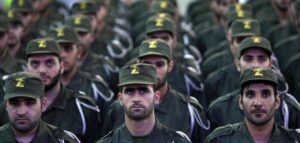
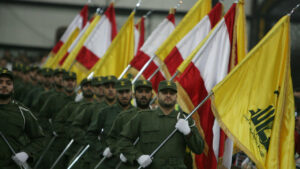
Hezbollah was formed in Lebanon in 1982, during one of the most turbulent periods in Middle Eastern history. At that time, Lebanon was in the middle of a brutal civil war that involved multiple domestic factions and foreign powers.
The organization emerged following Israel’s invasion of Lebanon in 1982, which aimed to expel Palestinian armed groups operating from Lebanese territory. In response to the invasion, several Shiite Muslim groups in Lebanon began organizing resistance movements. wikipedia
Iran played a decisive role in shaping these movements.
Iran’s Islamic Revolutionary Guard Corps (IRGC) sent about 1,500 military advisers to Lebanon’s Bekaa Valley to train and organize fighters. These forces helped create what would later become Hezbollah. wikipedia
The name Hezbollah literally means “Party of God.”
From its earliest days, Hezbollah was not only a military organization but also an ideological movement rooted in the political philosophy of Iran’s Islamic Revolution.
The Ideological Foundations of Hezbollah
Religion, Revolution, and Political Identity
Hezbollah’s ideology is deeply connected to Shiite political Islam, particularly the philosophy developed during Iran’s 1979 Islamic Revolution.
At the center of this ideology is the concept known as Wilayat al-Faqih (Guardianship of the Islamic Jurist). This doctrine argues that Islamic scholars should guide political authority in society.
Hezbollah’s early manifesto pledged loyalty to Iran’s Supreme Leader and called for resistance against Israel and Western influence in the region. cfr.org
But Hezbollah’s ideology is not purely religious. It is also political and social.
The organization presents itself as:
- A resistance movement
- A defender of marginalized Shiite communities
- A political actor within Lebanon
Over time, Hezbollah evolved into a hybrid organization combining:
- a military force
- a political party
- social welfare institutions
Hezbollah as a “State Within a State”
One of the most controversial aspects of Hezbollah is its dual role inside Lebanon.
On one hand, Hezbollah participates in Lebanese politics and holds seats in parliament.
On the other hand, it maintains its own independent army, which operates outside the control of the Lebanese government.
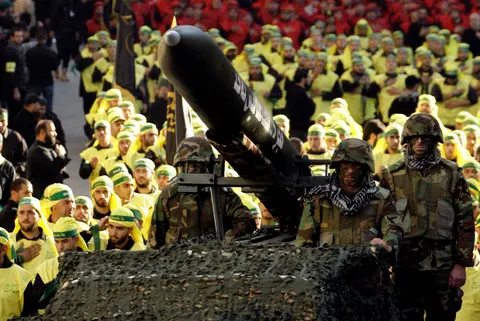
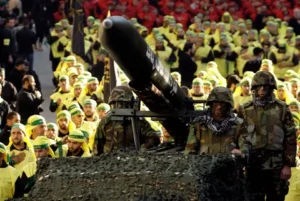
Hezbollah’s military capabilities are extensive. Analysts estimate the group possesses tens of thousands of rockets and missiles, making it one of the most powerful non-state military actors in the world.
Because of this, critics often describe Hezbollah as a “state within a state.”
Supporters argue the opposite: they claim Hezbollah protects Lebanon from external threats.
Why Iran Supports Hezbollah
Strategic Depth and Proxy Warfare
Iran’s support for Hezbollah is both ideological and strategic.
Financially, Iran provides hundreds of millions of dollars each year to the organization in weapons, training, and funding.
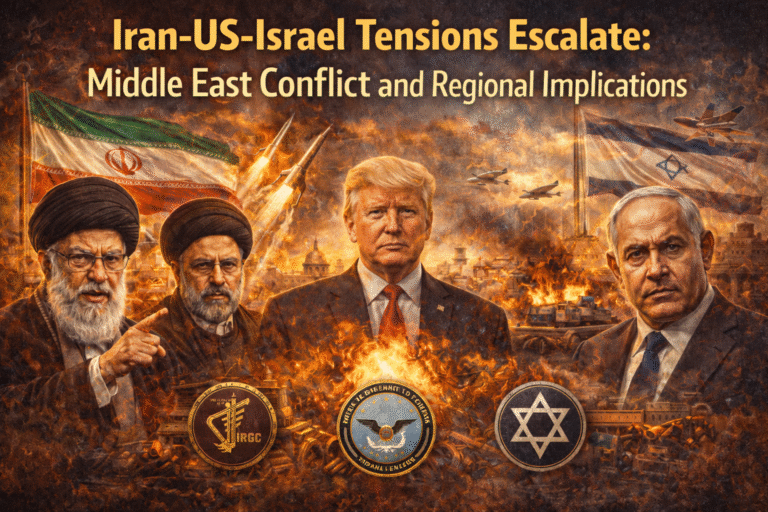
This support forms part of Iran’s broader regional strategy known as the “Axis of Resistance.”
This network includes groups aligned with Iran across the Middle East, including organizations in:
- Lebanon
- Iraq
- Syria
- Yemen
- Gaza
Iran’s strategy is based on a simple geopolitical logic:
Instead of fighting enemies directly, Iran builds alliances with non-state actors who can influence regional conflicts.
This allows Iran to extend its influence while avoiding direct confrontation.
The Psychology of Proxy Power
From a psychological perspective, Hezbollah plays a critical role in Iran’s perception of security.
Iran has historically faced powerful adversaries, including:
- Iraq during the Iran-Iraq War
- the United States
- Israel
Because Iran lacks the conventional military power of some of its rivals, it relies heavily on asymmetric warfare.
Hezbollah functions as a deterrence mechanism.
If Iran is attacked, Hezbollah can respond against Israel or other regional targets.
This strategic relationship creates what political scientists call “forward defense.”
Hezbollah’s Presence in Lebanon and Gaza
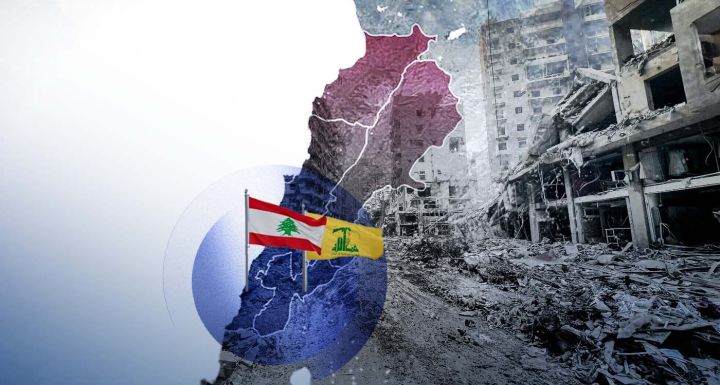
Hezbollah’s strongest base remains Lebanon, especially in the southern regions and parts of Beirut.
However, its influence extends far beyond Lebanon.
Hezbollah has:
- trained Palestinian militant groups
- provided military expertise
- coordinated with factions operating in Gaza
Iran has historically supported both Hezbollah and Hamas, though their relationship has sometimes been complicated by regional politics.
Despite differences, they share a common objective: opposing Israel’s regional dominance.
Why Israel Sees Hezbollah as a Major Threat
Israel considers Hezbollah one of its most dangerous adversaries.
The reasons are both military and strategic.
Military Capabilities
Hezbollah possesses a large arsenal of rockets capable of striking deep inside Israel.
Some estimates suggest the group may have over 150,000 missiles and rockets.
This capability creates a major security concern for Israeli defense planners.
Northern Front Risk
Hezbollah’s location in southern Lebanon means Israel could face a two-front war:
- Gaza in the south
- Hezbollah in the north
This scenario is often described by Israeli analysts as one of the country’s most serious strategic risks.
Cycles of Conflict Between Israel and Hezbollah
The conflict between Israel and Hezbollah has erupted multiple times.
Major confrontations include:
- Israeli occupation of southern Lebanon (1978-2000)
- the 2006 Lebanon War
- repeated cross-border clashes since then
These conflicts have produced devastating consequences for civilians on both sides.
More recently, regional tensions have intensified again as Hezbollah and Israel exchange attacks in response to wider conflicts involving Iran.
Hezbollah’s Social and Political Influence
Another important aspect of Hezbollah is its social welfare system.
The organization runs:
- hospitals
- schools
- charities
- reconstruction programs
These services helped Hezbollah gain strong support among marginalized communities in Lebanon.
In many areas where the state failed to provide basic services, Hezbollah stepped in to fill the gap.
This strategy created deep social loyalty.
It also transformed Hezbollah from merely a militia into a powerful social movement.
The Philosophical Dimension of Resistance
Hezbollah’s narrative is built around the philosophy of resistance.
In political philosophy, resistance movements often emerge when communities feel oppressed or marginalized.
Examples throughout history include:
- anti-colonial movements
- liberation struggles
- insurgencies against occupying forces
Hezbollah portrays itself within this historical tradition.
However, critics argue that modern resistance movements often become entangled with power politics, leading to cycles of violence.
This philosophical tension lies at the heart of debates about Hezbollah.
Is it resistance?
Or is it a militant proxy serving larger geopolitical ambitions?
The Psychological Power of Identity
Identity politics plays a major role in Hezbollah’s influence.
For many Lebanese Shiites, the organization represents:
- dignity
- protection
- political representation
Historically, the Shiite population in Lebanon experienced economic and political marginalization.
Hezbollah emerged partly as a response to that social inequality.
By framing its struggle as both religious and national, Hezbollah built a powerful emotional connection with its supporters.
Hezbollah’s Agenda in the Middle East
Hezbollah’s agenda can be understood through three strategic goals.
1. Resistance Against Israel
Hezbollah views Israel as a long-term adversary and positions itself as a force resisting Israeli military presence in the region.
2. Protecting Iranian Strategic Interests
Because of its close relationship with Tehran, Hezbollah also acts as a regional ally supporting Iran’s geopolitical goals.
3. Maintaining Political Influence in Lebanon
Domestically, Hezbollah seeks to preserve its role as one of the most powerful actors in Lebanese politics.
These goals sometimes overlap—and sometimes conflict.
The Future of Hezbollah in the Middle East
The future of Hezbollah remains uncertain.
Regional tensions, shifting alliances, and domestic Lebanese politics continue to reshape the organization’s role.
Recent developments suggest Hezbollah’s involvement in regional conflicts could deepen political divisions inside Lebanon itself.
The organization stands at a crossroads between:
- military resistance
- political legitimacy
- regional proxy warfare
Conclusion: A Movement Shaped by Conflict
Hezbollah cannot be understood through a single lens.
It is simultaneously:
- a militant organization
- a political party
- a social movement
- a regional proxy force
Its rise reflects broader dynamics of Middle Eastern history: foreign intervention, identity politics, and geopolitical rivalry.
Understanding Hezbollah ultimately requires recognizing the complex forces that shape the region itself.
The Middle East remains a landscape where history, ideology, and power intersect, and Hezbollah stands at the center of that intersection.
Discussion
How should Hezbollah be understood today?
- As a resistance movement?
- As an Iranian proxy?
- Or as a political actor shaped by regional conflict?
The answer may depend not only on politics—but also on perspective.