










Nuclear Energy on the Moon: Powering the Future of Space Exploration
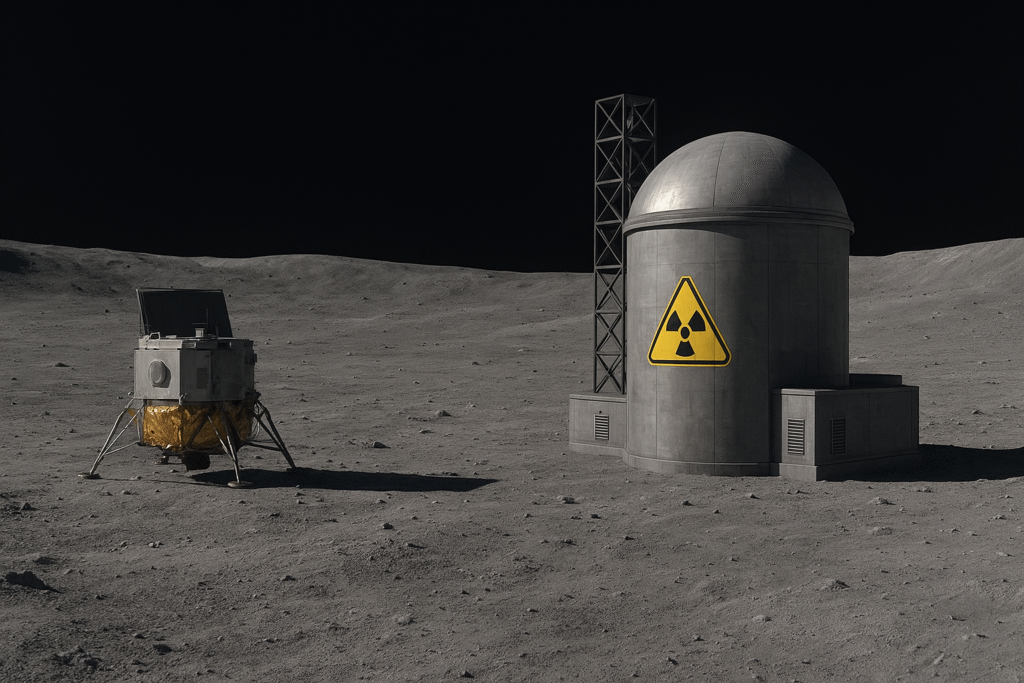
Nuclear Energy on the Moon is no longer just an idea—it is fast becoming a bold reality in NASA’s vision for future space exploration. Earlier this month, Sean Duffy, the acting head of NASA, announced an accelerated push in the Fission Surface Power program, which aims to place a nuclear reactor on the Moon by 2030. This reactor would generate up to 100 kilowatts of electricity, a vital step for sustaining human life on both the Moon and Mars.
While the plan is ambitious and filled with promise, it also raises important questions about safety, readiness, and balance. Can NASA achieve such a goal within the decade without compromising other scientific priorities?
Why Nuclear Energy on the Moon Matters
A surface reactor will be essential for enabling sustained human missions beyond Earth. Solar energy, while effective in many contexts, cannot fully support exploration in environments where long nights and harsh conditions dominate. The Moon experiences 14 days of darkness, leaving solar panels without power for half the lunar month. On Mars, dust storms and fluctuating sunlight make reliance on solar energy unpredictable.
By contrast, nuclear fission provides continuous and reliable energy—powering habitats, life-support systems, scientific instruments, and even the technologies required for producing oxygen and water.
Learn more about NASA’s Fission Surface Power program here 🌍
A History of Space Reactors
Nuclear Energy on the Moon and Beyond: Past Lessons
The idea of nuclear reactors in space is not entirely new. In 1965, the United States launched the first nuclear-powered satellite, which generated about 500 watts of electricity before a non-nuclear component failed after 43 days.
From 1967 to 1988, the Soviet Union deployed 33 nuclear-powered satellites, some capable of producing 5 kilowatts. However, not all missions went smoothly. In 1978, the failure of a support system led to the uncontrolled reentry of a Soviet satellite, scattering radioactive debris across 20,000 square miles of Canada.
These events highlight both the potential and risks of using nuclear power in space. Reactors can indeed function reliably outside Earth, but the integration of support systems is critical to prevent catastrophic outcomes.
Why Nuclear Energy on the Moon is a Game Changer
Reliable Power for Lunar and Martian Settlements
NASA’s proposed lunar reactor is significantly more powerful than its predecessors. While earlier designs were about the size of a car, the new system will likely be as large as a freight shipping container. This increase in size reflects the greater demands of sustained exploration—not just powering small satellites, but entire bases for human life and research.
Such a reactor would:
- Provide uninterrupted energy during the 14-day lunar night.
- Ensure constant power supply on Mars, unaffected by dust storms.
- Support advanced research and experiments.
- Enable the production of vital resources like fuel, water, and breathable air.
By meeting these needs, nuclear energy becomes a cornerstone for long-term missions and even the possibility of permanent colonies.
Balancing Ambition with Caution
Challenges of Nuclear Energy on the Moon
While the excitement around NASA’s 2030 goal is justified, the challenges are significant. Critics caution that an overly aggressive schedule could compromise not only safety but also NASA’s broader scientific goals. Building and deploying such a reactor requires:
- Rigorous testing of systems and safety mechanisms.
- International collaboration, given the shared nature of space.
- Careful consideration of risk vs. reward, especially given past accidents.
Still, the rewards are immense. If successful, nuclear energy could pave the way for sustainable lunar settlements and provide the foundation for human exploration of Mars.
Final Thoughts
Nuclear Energy on the Moon represents both opportunity and responsibility. With a 2030 target, NASA has placed a marker in humanity’s journey to the stars. This effort is about more than power—it is about building the infrastructure for a new space age where humans can live, work, and thrive beyond Earth.
As the Apostle Paul once wrote, “All things are lawful for me, but not all things are helpful” (1 Corinthians 10:23). The same could be said of technology: it is not enough to achieve what is possible—we must do so with wisdom, caution, and foresight.
The next decade will determine whether nuclear energy becomes the key to unlocking the Moon and Mars—or a reminder of the challenges of pushing technology too far, too fast.