








For decades, nuclear diplomacy in the Middle East has remained one of the world’s most complex and closely watched geopolitical issues. It is a subject where diplomacy, national security, international law, economics, and regional politics intersect. Every new round of negotiations or diplomatic breakdown attracts global attention because the consequences extend far beyond the region itself.
The Middle East occupies a strategic position in global politics. It is home to critical energy resources, important shipping routes, longstanding political rivalries, and several of the world’s most sensitive security concerns. Within this environment, questions surrounding nuclear technology have become central to international diplomacy.
While some governments argue that diplomatic agreements are the most effective way to reduce tensions, others believe that negotiations alone cannot guarantee long-term security. This disagreement has fueled one of the most enduring debates in international relations: Can diplomacy succeed without credible military deterrence, or do both need to exist together?
Nuclear Diplomacy in the Middle East: Why It Matters
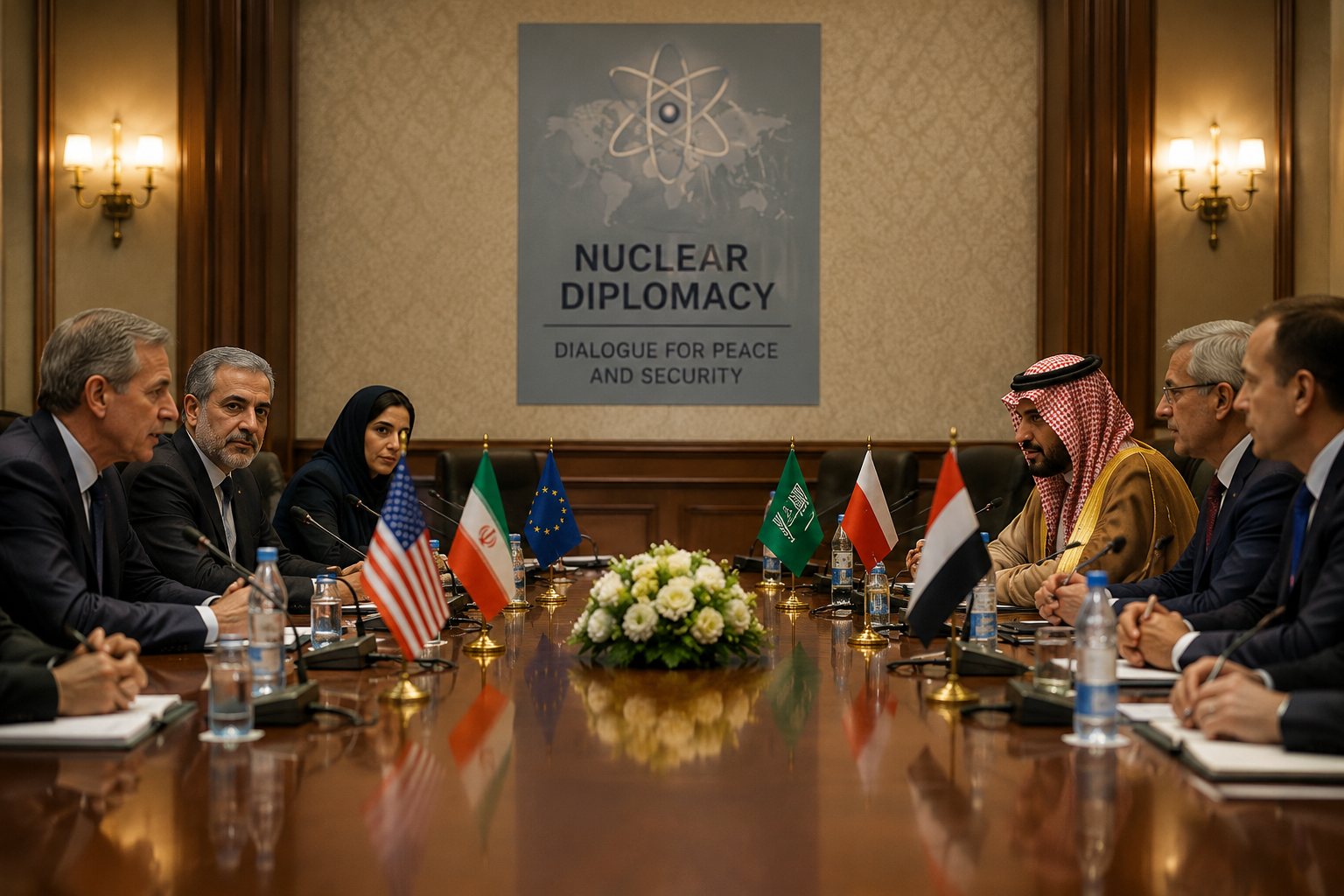
Nuclear diplomacy involves negotiations designed to prevent the spread of nuclear weapons while allowing countries to pursue peaceful nuclear technology under international supervision.
The issue is particularly important in the Middle East because regional security concerns are closely linked. Decisions made by one country often influence the strategic calculations of its neighbors, creating what security experts call a “security dilemma.” When one nation strengthens its defenses, others may feel compelled to respond, even if no immediate conflict exists.
This dynamic makes diplomatic engagement especially valuable. Agreements that increase transparency, inspections, and communication can reduce misunderstandings and lower the risk of unintended escalation.
A Brief History of Nuclear Negotiations
International efforts to address nuclear concerns in the Middle East have evolved over several decades.
Negotiations have involved regional governments alongside major world powers and international organizations. These discussions have often focused on limiting sensitive nuclear activities, expanding international inspections, and reducing the possibility of nuclear weapons development.
Some agreements have produced periods of reduced tension and increased international cooperation. Others have faced significant challenges due to political disagreements, changing governments, economic sanctions, and questions about compliance.
The history of these negotiations demonstrates that diplomacy is rarely a straight path. Progress is often followed by setbacks, requiring patience and sustained political commitment.
The Role of Deterrence in International Security
Supporters of military deterrence argue that diplomacy is most effective when backed by credible defensive capabilities.
According to deterrence theory, countries are less likely to take aggressive actions if they believe the costs would outweigh any potential benefits. Military preparedness, in this view, strengthens negotiating positions rather than replacing diplomacy.
Many governments therefore maintain that strong defense capabilities and diplomatic engagement should complement each other.
However, critics argue that excessive military pressure can increase mistrust and make negotiations more difficult. They contend that public threats, military exercises, and sanctions may encourage governments to adopt more rigid negotiating positions instead of seeking compromise.
This disagreement remains one of the central debates in modern international relations.
Nuclear Diplomacy in the Middle East and the Global Economy
Diplomatic tensions do not affect only governments.
Global financial markets, energy companies, shipping industries, and ordinary consumers often feel the consequences of geopolitical uncertainty.
The Middle East supplies a significant portion of the world’s energy resources. Important maritime routes such as the Strait of Hormuz carry large volumes of international oil and gas exports. Any disruption to these routes can influence global fuel prices, transportation costs, inflation, and international trade.
Businesses also become more cautious during periods of geopolitical uncertainty, delaying investments and adjusting supply chains.
As a result, successful diplomacy contributes not only to regional stability but also to broader economic confidence.
The Importance of International Institutions
International organizations play a crucial role in nuclear diplomacy.
The International Atomic Energy Agency (IAEA) monitors peaceful nuclear activities, conducts inspections where agreements permit, and provides technical expertise that helps build international confidence.
Similarly, the United Nations provides a forum where governments can address disputes through diplomatic channels instead of military confrontation.
Independent verification is particularly important because successful agreements depend on trust supported by evidence rather than assumptions.
Learn more about the work of the International Atomic Energy Agency at https://www.iaea.org and the United Nations at https://www.un.org.
Can Sanctions Achieve Diplomatic Goals?
Economic sanctions have become one of the most frequently used foreign policy tools.
Supporters believe sanctions increase economic pressure and encourage governments to negotiate.
Critics argue that sanctions sometimes strengthen political divisions, increase humanitarian challenges, and reduce incentives for compromise.
Academic research suggests that sanctions produce mixed results. Their effectiveness often depends on international coordination, clearly defined objectives, and whether diplomatic pathways remain available.
Consequently, many experts view sanctions as one element within a broader diplomatic strategy rather than a complete solution.
The Debate: Can Military Deterrence and Negotiation Coexist?
Perhaps the most important question surrounding nuclear diplomacy in the Middle East is whether diplomacy and military deterrence can function together.
One perspective argues that negotiations require credible security guarantees. Without deterrence, agreements may lack enforcement and become vulnerable to violations.
Another perspective argues that lasting peace depends primarily on trust-building, transparency, and sustained dialogue. According to this view, excessive reliance on military threats risks undermining diplomatic progress.
A third viewpoint seeks a balanced approach. It suggests that defensive preparedness can coexist with diplomacy, provided both sides remain committed to communication and internationally recognized agreements.
This balanced approach has influenced many contemporary diplomatic efforts around the world.
Lessons for Future Diplomacy
The future of nuclear diplomacy will likely depend on several factors:
- Consistent political leadership.
- Transparent verification mechanisms.
- Regional cooperation.
- Effective communication during crises.
- Continued involvement of international institutions.
- Recognition that security concerns exist on all sides.
History demonstrates that diplomatic progress often requires persistence. Even negotiations that appear unsuccessful can establish communication channels that prove valuable during future crises.
Conclusion
The evolution of nuclear diplomacy in the Middle East illustrates the complexity of balancing national security with international cooperation.
Diplomacy alone cannot eliminate every source of geopolitical tension, just as military strength alone cannot guarantee lasting peace.
The most durable solutions are likely to emerge from approaches that combine credible security arrangements, transparent international oversight, economic cooperation, and sustained political dialogue.
The debate therefore continues:
Should governments prioritize stronger deterrence, deeper diplomacy, or an integrated strategy that combines both?
The answer will shape not only the future of the Middle East but also broader international security in an increasingly interconnected world.
Frequently Asked Questions
What is nuclear diplomacy?
Nuclear diplomacy refers to negotiations and agreements intended to prevent nuclear weapons proliferation while supporting the peaceful use of nuclear technology under international oversight.
Why is the Middle East central to nuclear diplomacy?
The region’s strategic location, security concerns, energy resources, and political rivalries make nuclear issues particularly significant for international peace and stability.
What role does the IAEA play?
The International Atomic Energy Agency promotes the peaceful use of nuclear energy and helps verify compliance with international nuclear safeguards.
Can diplomacy and deterrence work together?
Many international relations experts believe both can coexist when supported by transparency, communication, and internationally recognized agreements.
The latest Iran–US Conflict Escalation has intensified concerns about the future of security in the Middle East, raising questions about diplomacy, military strategy, energy markets, and the possibility of a wider regional confrontation. What began as a series of disputes between Washington and Tehran has developed into a crisis involving strategic interests, regional alliances, and competing visions of security.
The Middle East has historically been a region where local conflicts can quickly develop international consequences. With major energy routes, military installations, and geopolitical rivalries concentrated in the Gulf, any direct confrontation between Iran and the United States carries implications far beyond the two countries involved.
While supporters of military action argue that deterrence is necessary to prevent further threats, critics warn that escalation could create instability that becomes difficult to control. This debate has once again placed the question of military power versus diplomacy at the center of international discussions.