








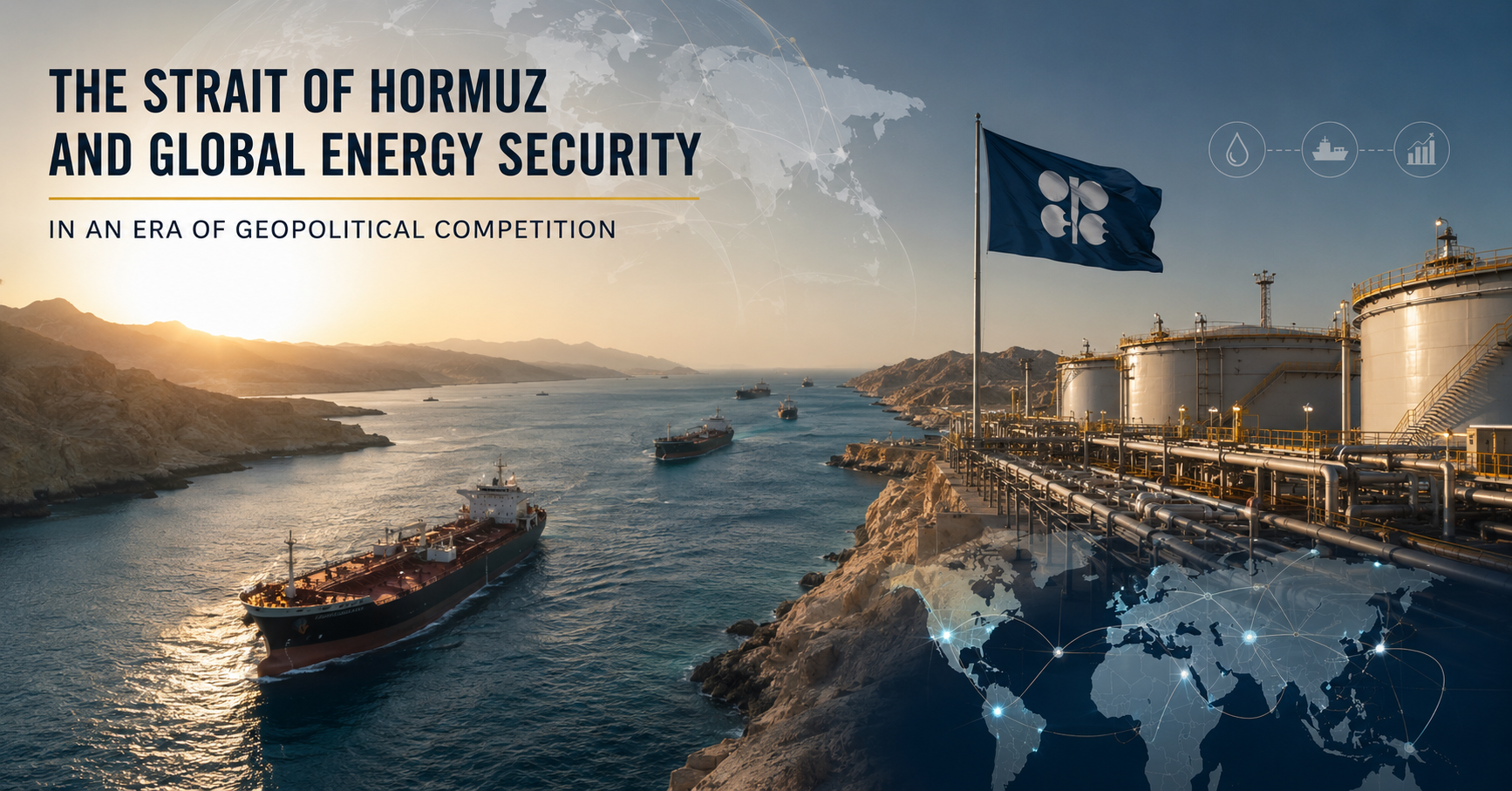
The Strait of Hormuz is one of the world’s most strategically important maritime passages. Although relatively narrow in geographical terms, it serves as a critical gateway connecting the energy-rich Persian Gulf to global markets. Every day, millions of barrels of crude oil, refined petroleum products, and liquefied natural gas pass through this vital waterway, making it indispensable to international trade and energy security.
Despite ongoing advances in renewable energy and global efforts to reduce dependence on fossil fuels, the Strait of Hormuz remains central to the functioning of the global economy. Any disruption—whether caused by geopolitical tensions, military confrontations, piracy, or infrastructure failures—has the potential to send shockwaves through financial markets, increase fuel prices, and threaten economic stability across multiple continents.
In an increasingly competitive geopolitical landscape, the Strait has become more than a shipping lane. It is now a symbol of strategic influence, diplomatic negotiations, military deterrence, and economic resilience. The question facing policymakers is no longer whether the Strait matters, but rather how the international community can protect one of the world’s most critical energy corridors while avoiding unnecessary conflict.
Why the Strait of Hormuz and Global Energy Security Are Closely Connected
The Strait of Hormuz and Global Energy Security are inseparable because of the extraordinary volume of energy transported through the passage.
Located between Iran and Oman, the Strait connects the Persian Gulf with the Gulf of Oman and the Arabian Sea. Major oil-producing nations—including Saudi Arabia, the United Arab Emirates, Kuwait, Iraq, Qatar, and Iran—depend on this route to export energy to international markets.
According to the International Energy Agency (IEA) and the U.S. Energy Information Administration (EIA), roughly one-fifth of the world’s petroleum consumption passes through the Strait each day. This makes it one of the busiest and most strategically valuable maritime chokepoints on Earth.
Unlike many trade routes, there are relatively few economically viable alternatives capable of handling similar export volumes. As a result, even temporary disruptions can influence global supply chains and commodity prices.
The Strategic Importance of the Strait of Hormuz
The significance of the Strait extends beyond oil exports.
Qatar, one of the world’s leading exporters of liquefied natural gas (LNG), relies heavily on uninterrupted access through the Strait. Many countries in Asia and Europe depend on LNG shipments from the Gulf to support electricity generation, industrial production, and household energy needs.
In addition to energy, the Strait facilitates the movement of commercial goods, industrial materials, and maritime trade connecting the Middle East with global markets.
Because of this strategic importance, several countries maintain naval forces in nearby waters to protect commercial shipping and ensure freedom of navigation.
Geopolitical Competition in the Gulf
The Gulf region has long been characterized by overlapping political, economic, and security interests.
Regional rivalries, international alliances, and competition among major global powers have contributed to an environment where diplomatic tensions can quickly influence maritime security.
The Strait of Hormuz frequently becomes a focal point during periods of heightened geopolitical uncertainty because it represents both economic leverage and strategic influence.
While governments emphasize their commitment to maintaining freedom of navigation under international law, competing national interests often complicate diplomatic negotiations.
This reality illustrates how maritime security has become inseparable from broader geopolitical competition.
How Disruptions Affect the Global Economy
Global energy markets respond rapidly to uncertainty.
Even without an actual closure of the Strait, concerns about potential disruptions often influence commodity prices. Traders incorporate geopolitical risks into market expectations, contributing to price volatility.
Higher energy prices affect transportation, manufacturing, agriculture, aviation, and household expenses worldwide.
Developing economies are often particularly vulnerable because higher fuel costs increase inflation and place additional pressure on government budgets.
Supply chain disruptions may also delay industrial production, reduce consumer confidence, and influence investment decisions.
These economic effects demonstrate that maritime security is no longer solely a military issue—it has become a central economic concern.
Energy Transition and Continuing Dependence
One might expect the global transition toward renewable energy to reduce the strategic importance of the Strait of Hormuz.
While renewable energy has expanded significantly, the transition remains gradual.
Oil and natural gas continue to supply a substantial share of global energy demand. Heavy industries, aviation, shipping, and petrochemical production still rely extensively on fossil fuels.
Consequently, global dependence on secure maritime energy transportation is likely to continue for years to come.
At the same time, investments in renewable energy, battery storage, hydrogen technologies, and diversified energy sources may gradually reduce future vulnerabilities associated with single transportation corridors.
The Role of International Law
International maritime law provides a legal framework governing navigation through international waterways.
Freedom of navigation remains a fundamental principle supporting global commerce.
International institutions encourage peaceful dispute resolution and emphasize cooperation among coastal states and maritime users.
However, legal principles alone cannot eliminate geopolitical disagreements.
Effective maritime security requires diplomatic engagement, confidence-building measures, and practical cooperation between governments.
Can Diplomacy Reduce Maritime Risks?
Diplomacy remains one of the most effective tools for preventing misunderstandings from escalating into larger crises.
Communication between governments helps clarify intentions, establish confidence, and reduce the risk of accidental confrontations.
Regional mediators have occasionally played important roles in facilitating dialogue between opposing parties, demonstrating that even periods of significant tension can produce opportunities for negotiation.
While diplomacy cannot eliminate all disagreements, it often creates mechanisms that reduce uncertainty and improve crisis management.
The Debate: Should Global Energy Security Depend on a Single Maritime Corridor?
One of the most significant policy debates concerns whether global energy markets remain overly dependent on the Strait of Hormuz.
Supporters of current energy infrastructure argue that the Strait has operated successfully for decades despite periodic geopolitical tensions.
They point to international naval cooperation, improved surveillance technologies, and commercial resilience as reasons for continued confidence.
Others argue that relying heavily on a single chokepoint represents an unnecessary strategic vulnerability.
They advocate greater investment in:
- Alternative export pipelines.
- Renewable energy.
- Strategic petroleum reserves.
- Diversified LNG supply chains.
- Expanded regional energy cooperation.
This debate reflects broader questions about balancing efficiency with resilience in an increasingly uncertain geopolitical environment.
Technology and the Future of Maritime Security
Technological innovation is transforming maritime security.
Satellite monitoring, artificial intelligence, unmanned aerial systems, maritime surveillance drones, and automated vessel tracking now provide governments and commercial operators with unprecedented situational awareness.
These technologies improve the ability to detect potential risks, coordinate emergency responses, and protect commercial shipping.
However, cybersecurity has emerged as a new challenge.
Modern shipping increasingly depends on digital navigation, communications, and logistics systems that require robust protection against cyber threats.
Future maritime security strategies will therefore combine traditional naval capabilities with advanced technological solutions.
Building Long-Term Energy Resilience
Long-term energy security involves more than protecting shipping routes.
Countries are increasingly investing in:
- Renewable energy infrastructure.
- Regional electricity interconnections.
- Energy efficiency.
- Strategic fuel reserves.
- Diversified import sources.
- Climate-resilient infrastructure.
These initiatives strengthen national resilience while reducing exposure to geopolitical disruptions.
Nevertheless, until the global energy transition advances further, the Strait of Hormuz will remain one of the world’s most important strategic waterways.
Conclusion
The relationship between the Strait of Hormuz and Global Energy Security illustrates how geography continues to shape international politics.
This narrow maritime corridor influences not only regional security but also economic stability, international trade, and global energy markets.
Protecting the Strait requires more than military capabilities. Sustainable security depends on diplomacy, international cooperation, resilient infrastructure, diversified energy strategies, and respect for international law.
As geopolitical competition continues to evolve, governments face a critical challenge: maintaining secure energy supplies while avoiding actions that increase regional instability.
The future of global energy security may ultimately depend not only on technological innovation but also on the willingness of nations to cooperate despite political differences.
Frequently Asked Questions (FAQ)
Why is the Strait of Hormuz important?
The Strait of Hormuz is one of the world’s busiest energy shipping routes, connecting major oil- and gas-producing countries with international markets.
How does the Strait affect global energy security?
Disruptions can influence oil prices, natural gas supplies, shipping costs, and global economic stability.
Can renewable energy reduce dependence on the Strait?
Over time, increased renewable energy adoption may reduce global reliance on fossil fuel exports, but oil and natural gas remain essential components of the global energy system.
What organizations monitor global energy markets?
The International Energy Agency (IEA) and the U.S. Energy Information Administration (EIA) publish regular assessments of global energy production, demand, and trade.
Further Reading
- International Energy Agency (IEA): https://www.iea.org
- U.S. Energy Information Administration (EIA): https://www.eia.gov
- International Maritime Organization (IMO): https://www.imo.org